Rohin Francis dismantles the sci-fi fantasy of immortality to reveal a far more urgent reality: aging is the single greatest risk factor for death, responsible for roughly two-thirds of all fatalities globally. This isn't about billionaires chasing eternal life; it's about reframing a universal biological process as a treatable condition that currently dictates the mortality of every human being. Francis argues that by understanding the statistical mechanics of aging, we can shift from accepting premature death to actively intervening in the world's biggest cause of suffering.
The Universal Ticking Clock
Francis opens by addressing the sensationalism surrounding longevity science, noting that media coverage often "sell[s] it as a way to make humans live to 200 or something equally sci-fi." He acknowledges this skepticism is common, admitting that his own "initial knee-jerk response" was to view the field as a vanity project for the wealthy. However, he pivots quickly to a more grounded, data-driven perspective that strips away the glamour to reveal a stark biological constant.
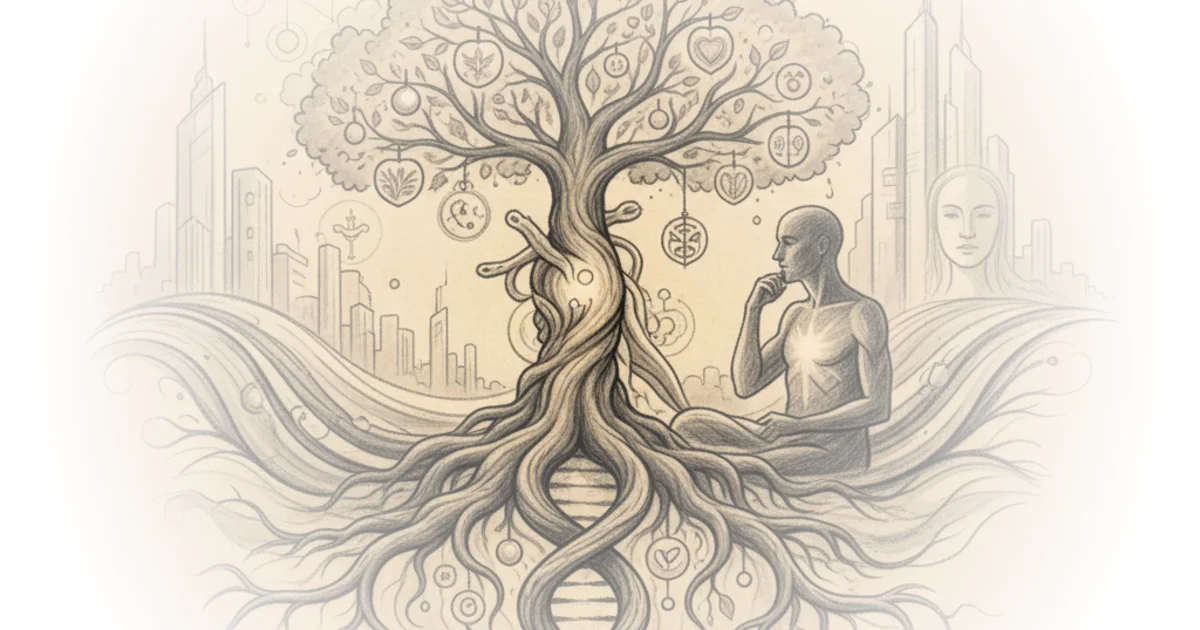
The core of Francis's argument rests on a specific statistical curve: the risk of death doubles approximately every eight years for humans. He illustrates this with a compelling comparison, noting that while a person in their thirties faces a one-in-a-thousand annual risk of death, that probability skyrockets to "one in six chance of death every year" by the time they reach their nineties. This isn't a matter of lifestyle choices or bad luck; it is a fundamental law of human biology that applies universally, regardless of geography or socioeconomic status.
"If I were to find me some undiscovered tribe in the Amazon rainforest... their mortality rate doubling time would be eight years," Francis explains, emphasizing that this is a "fundamental fact about being human." This framing is powerful because it removes the stigma of individual failure from aging. It suggests that the "universal ticking clock" inside our bodies is a mechanical process, not a moral judgment or an inevitable tragedy.
Aging is the world's biggest risk factor... merely the fact of getting older makes you so much more susceptible to the cancer, the heart disease, the stroke, the Alzheimer.
Reframing Aging as a Treatable Process
The most provocative move in the piece is the attempt to reclassify aging not as a natural life stage, but as the primary driver of disease. Francis challenges the conventional medical view that separates conditions like cancer or dementia from the aging process itself. He argues that these are merely symptoms of the underlying mechanism of aging, which he contends is responsible for "about two-thirds of deaths around the world."
To support this, Francis points to interventions like calorie restriction, which has been shown in various animal models to delay not just one disease, but a suite of age-related conditions simultaneously. "They get less cancer, they get less heart disease," he notes, suggesting that these diseases are "pushed back until later in life" rather than eliminated. This implies that the aging process itself is a unified system that can be slowed, rather than a collection of unrelated failures.
However, Francis is careful to navigate the semantic trap of calling aging a "disease." He admits he dislikes the term because he doesn't want to tell a sixty-year-old that they are "diseased just by the fact that you've been on this Earth for 59 years." Instead, he leans on the concept of "negligible senescence" found in certain species like tortoises, whose risk of death does not increase with age. This biological counter-example proves that aging is not an immutable law of physics, but a variable biological process that can, in theory, be altered.
Critics might note that grouping diverse conditions like heart disease and Alzheimer's under the single umbrella of "aging" risks oversimplifying the distinct molecular pathways involved in each. While the correlation is undeniable, treating them as a single target for therapy remains a massive scientific hurdle. Francis acknowledges this complexity by introducing the "10 Hallmarks of the aging process," a list of interlinked biological mechanisms that suggests the solution will likely require a multi-pronged approach rather than a single "cure."
From Physics to Policy
Francis leverages his background as a physicist to argue that the universality of the aging curve implies a solvable problem. "If there's this incredibly universal trend there must be something going on," he posits, suggesting that the very predictability of aging makes it a viable target for intervention. He contrasts the current acceptance of aging as inevitable with the historical acceptance of other treatable conditions, noting that society has moved from accepting infectious disease as fate to viewing it as a solvable medical challenge.
He also touches on the societal implications, arguing that the current focus on longevity often distracts from the reality that "it isn't just about making rich people live longer; it's about making all of us live healthier lives and avoiding premature death." This distinction is crucial for the policy debate, shifting the conversation from life extension for the elite to health span for the general population. The goal, he suggests, is not to live forever, but to compress the period of frailty and disease at the end of life.
The challenge is that you know you can enumerate it in this list of 10 things... although we've got this list of 10 things I think it's a really good starting point to understand and to begin to develop therapies.
Bottom Line
Francis's most compelling contribution is the reframing of aging from a passive, inevitable decline into an active, measurable risk factor that dominates global mortality statistics. While the scientific path to a "cure" for aging remains fraught with complexity and the risk of oversimplification, the argument that we should treat the aging process itself as the primary target of medical research is both logically sound and morally urgent. The biggest vulnerability in this vision lies in the translational gap between animal models and human application, but the shift in perspective alone offers a powerful new lens for public health policy.