The Hated One and Watchman Privacy Gabriel Custodian do not merely discuss privacy tools; they dismantle the very economic engine that fuels modern "privacy" content. In a landscape saturated with affiliate links and corporate sponsorships, their central claim is radical in its simplicity: true independence is impossible when your paycheck depends on a vendor you are supposed to critique. This conversation moves beyond technical tutorials to expose a moral hazard that threatens the integrity of the entire digital rights movement.
The Sponsorship Trap
The dialogue opens with a stark realization about the nature of free speech in a monetized ecosystem. The Hated One posits that "true free speech" is incompatible with sponsorship models because corporations inevitably demand silence on specific topics. This is not a theoretical concern; it is a structural reality where "if you're overly critical, you will lose access to all of these people that will get you the clicks and the headlines." The authors argue that this dynamic creates a silent censorship that is far more effective than government bans because it is self-imposed by creators desperate to maintain revenue streams.
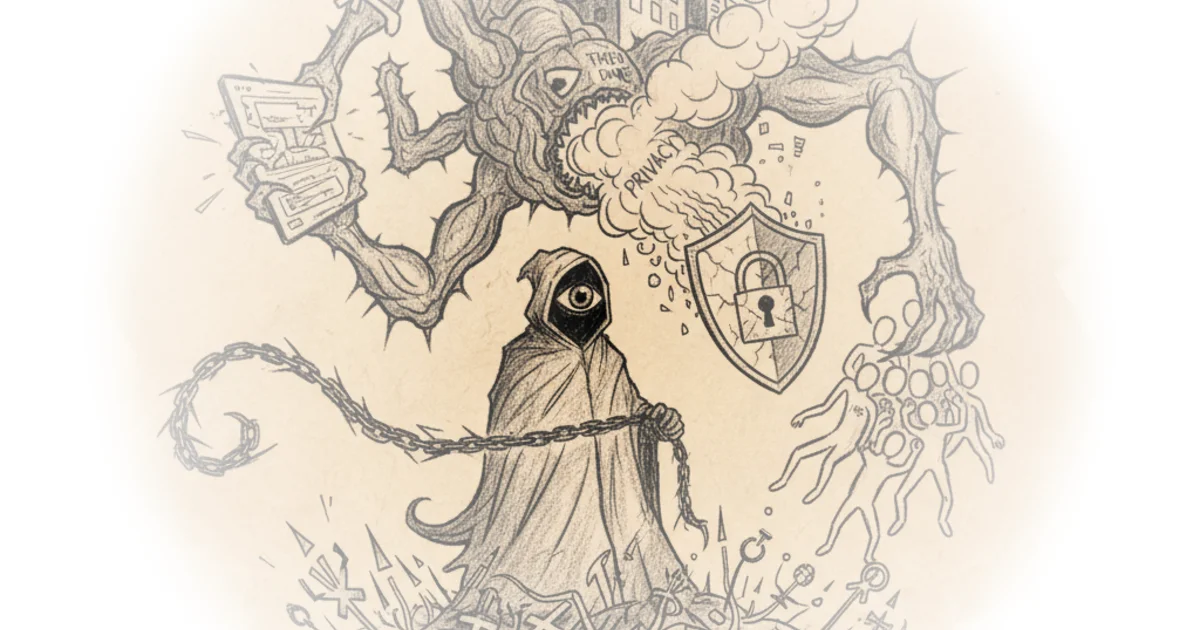
This framing is effective because it shifts the blame from the audience to the business model. It suggests that the "corrupting influence" is not just about bad actors, but about the inevitable conflict of interest when a reviewer's income is tied to the product's success. As The Hated One notes, "If you have sponsors, you work for your sponsors. If you don't have sponsors, you work for the audience." This binary choice forces listeners to reconsider the source of their information.
Critics might argue that high-quality production requires funding and that ethical sponsors exist who do not demand editorial control. However, the authors counter this by pointing out the psychological trap: even well-intentioned creators will subconsciously "diminish" negative events involving their paymasters to avoid cognitive dissonance.
"It's very difficult to convince somebody of the truth when their paycheck is dependent on them not knowing the truth."
The Illusion of Corporate Privacy
The conversation pivots to a practical test of privacy knowledge, where Watchman Privacy Gabriel Custodian challenges the mainstream narrative surrounding tech giants. When asked if Apple is a leader in privacy, Custodian delivers a definitive "no," arguing that privacy cannot be "granted to you by anybody else." He dismantles the utilitarian view that Apple provides the "greatest good for the greatest number" by asserting that "privacy is a bottom-up activity. It cannot be granted to you by anybody else."
This distinction is crucial. The authors suggest that relying on a corporation to protect your data is a fundamental contradiction. Custodian explains that while Apple may offer a sense of security, their approach is top-down: "We know what's going on. We're in charge here. We're going to take care of your privacy." The authors use this to highlight the difference between marketing slogans and legal reality, noting that Apple's privacy policy is functionally indistinguishable from Google's or Facebook's when read in full.
The argument gains weight when Custodian identifies the most private phone not as a specific device, but as "the one that you don't possess." For those who must use a phone, he recommends a Google Pixel running Graphene OS, used strategically with a Faraday bag to prevent location tracking. This advice underscores the theme that privacy is an active practice, not a passive feature purchased from a vendor.
The Cost of Independence
The most striking part of the interview is the mutual agreement on the necessity of rejecting the sponsorship model entirely. Watchman Privacy Gabriel Custodian reveals he has "no affiliates. No sponsors," a stance he attributes to his belief that "we have an entire show on the corrupting influence of sponsors." He describes his own VPN service with a humorous analogy, calling it a "condom for the internet" that can also "solve your erectile dysfunction," before immediately clarifying that he offers no affiliate codes for it.
This section serves as a powerful validation of the authors' thesis. By refusing to monetize their influence through traditional means, they maintain the ability to "call out people" and "viciously criticize" those who do take sponsors. The Hated One admits that he has been "burned by other privacy content creators" who turned their channels into marketing funnels, mistaking "marketing materials for doing actual research."
"If you have sponsors, you work for your sponsors. If you don't have sponsors, you work for the audience."
The authors acknowledge that this path is difficult and perhaps isolating, with The Hated One noting he hasn't spoken to many creators outside of a small circle in years. Yet, they frame this isolation as a badge of honor, a necessary cost for maintaining intellectual integrity in a field rife with "moral corruption."
Bottom Line
The strongest element of this piece is its unflinching exposure of the financial incentives that compromise privacy advocacy, forcing readers to question the motives behind every recommendation they receive. Its biggest vulnerability is the practical difficulty of sustaining a high-production podcast without sponsorship, a hurdle that may limit the reach of these vital messages to a niche audience. The takeaway is clear: in the current digital economy, the most trustworthy privacy expert is often the one who refuses to be paid.