This piece cuts through the noise of modern political despair by identifying a dangerous paradox: the very cynicism we use to protect our democracy might be the thing that destroys it. Cyril Hédoin challenges the standard economic assumption that we must design institutions for the worst possible human behavior, arguing that this defensive posture is actively breeding the self-fulfilling prophecy of political collapse. In an era where public trust is at a historic low, this analysis offers a crucial pivot point for understanding why our current systems feel so broken.
The Two Models of Human Nature
Hédoin begins by dismantling the binary view of human behavior that dominates political science. He introduces a typology borrowed from economist Samuel Bowles, distinguishing between the "Machiavellian" individual—purely self-interested and self-regarding—and the "Aristotelian," who is capable of acting for the collective good even at a personal cost. "Social scientists, especially economists, are torn between two general behavioral models," Hédoin writes, setting the stage for a deeper inquiry into which model actually governs our institutions.
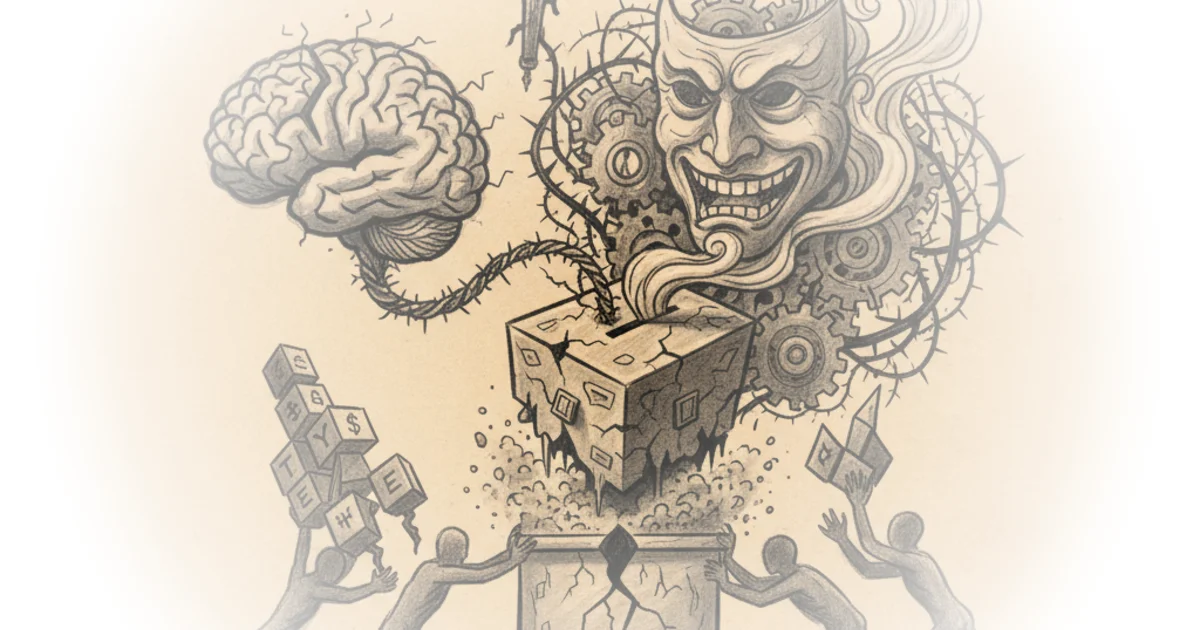
The author argues that while we often assume people are Machiavellians to be safe, this assumption ignores the experimental reality that most people are "impure Aristotelians" who care about norms and others' welfare. This distinction is vital because it suggests that our institutions are not just reflecting human nature, but actively shaping it. By designing systems that assume everyone is a knave, we may be discouraging the very civic virtue we claim to need.
"Self-governance —that is, giving ourselves rules that regulate our interactions in making collective decisions and using coercion to implement them—cannot be realized if our behavioral assumptions are false."
Hédoin's framing here is powerful because it shifts the blame from the individual to the system. If a society assumes its members are angels, it fails to enforce property rights; if it assumes they are all thieves, it creates a prison state. The middle ground is where democracy actually lives, yet we seem to be sliding toward the latter.
The Defense of Cynicism
The essay then tackles the intellectual heavyweights who defend the cynical view. Citing Geoffrey Brennan and James Buchanan, Hédoin explores why public choice theory insists on assuming the worst. They argue that even if most people are decent, a minority of ruthless actors can corrupt the system, and that political rules often favor the self-interested because they are willing to spend more to win. "The rules of politics favor the self-selection of Machiavellians," Hédoin notes, describing a dynamic where the ruthless out-compete the public-spirited.
This argument relies on a "Gresham's law of politics," where bad behavior drives out good. Hédoin acknowledges the strength of this logic, particularly the idea that we should be "risk-averse" because the harm caused by a few bad actors outweighs the benefits of many good ones. However, this perspective carries a hidden cost. By accepting that politics is inherently a game of rent-seeking and self-interest, we risk disengaging entirely.
Critics might note that this defense of cynicism, while logically sound in a vacuum, ignores the historical success of movements driven by genuine altruism and collective sacrifice. It assumes a static human nature rather than a malleable one that responds to the incentives we create.
"If you turn your back on politics you end up being tempted to put your faith in transitional enlightened dictators or a technocracy that disguises the sectorial interests they promote behind the jargon and the authority of science as a means to silence others."
This warning is the essay's most urgent point. When we decide that politics is nothing but a ruthless promotion of personal interests, the natural reaction is to seek a technocratic fix or an authoritarian savior. Hédoin correctly identifies that this is a trap: the market needs a political framework, and technocracy is just another form of politics, often more opaque and less accountable.
The Path to a Civic Religion
The final section of the piece pivots from diagnosis to prescription, looking toward "public reason liberalism" as a way out of the cynicism trap. Hédoin suggests that we need a new "civic religion" that acknowledges the reality of self-interest but insists on the possibility of transcending it. "The idea of public reason precisely encapsulates the Aristotelian behavioral model, which recognizes individuals' ability to commit to goals that transcend their interests and private judgments," he explains.
This is not a naive plea for goodness; it is a strategic necessity. The author argues that a purely Machiavellian political morality is self-defeating because it cannot sustain the institutions required for a free society. The challenge, as Hédoin puts it, is that "in the populist era, political cynicism is likely to be a self-fulfilling prophecy." If we stop believing in the possibility of public reason, we stop acting in ways that make it possible.
"Our normative role as social philosophers, is to shape this civic religion, surely a challenge sufficient to us all."
The strength of this conclusion lies in its refusal to accept the status quo as inevitable. It calls for a deliberate reconstruction of how we talk about and engage with governance. While the path forward is unclear, the alternative—total disengagement or authoritarianism—is far worse.
Bottom Line
Hédoin's strongest contribution is exposing how our defensive institutional design is actively eroding the civic virtue required to sustain democracy. The argument's biggest vulnerability is the difficulty of operationalizing this "civic religion" in a polarized, populist environment where trust is already fractured. The reader should watch for how institutions can be redesigned to reward Aristotelian behavior rather than just punishing Machiavellianism, as that is the only way to break the cycle of cynicism.