Scot McKnight does something rare in biblical commentary: he strips away the theological abstraction to reveal a startling, non-negotiable claim—that love is not merely an action we perform, but the very ontology of the Divine. In a cultural moment saturated with performative affection and transactional relationships, McKnight's assertion that "God is love" serves as a radical corrective to the idea that we can love God while ignoring the people standing right in front of us.
The Ontology of Love
McKnight begins by dismantling the common assumption that love is a human invention we occasionally direct toward the Divine. Instead, he argues that love is the fundamental substance of reality itself. "God's being, who God is, and therefore all that God does, is love," McKnight writes. "God cannot not love because God is love." This is a profound theological pivot. He clarifies that this is not a non-reciprocating statement where all forms of love become God, which would be idolatry, but rather that the Creator's nature is inextricably bound to love. If God were to cease loving, God would cease to be God.
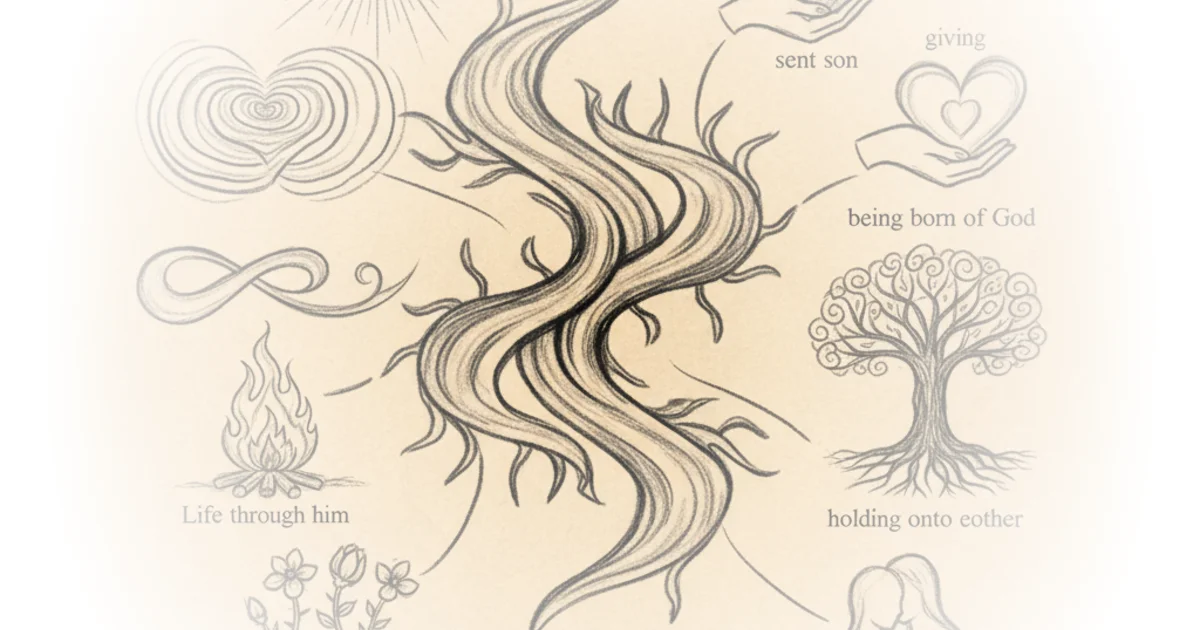
This framing draws a direct line from the ancient text of Exodus 34:6-7, where God defines Himself as "abounding in love and faithfulness," to the Johannine assertion in 1 John. McKnight notes that while God's anger is a real response to sin, it is not who God is; rather, "Anger is what God does not who God is." This distinction is crucial for busy readers who struggle with the concept of a wrathful deity. As McKnight puts it, "God gets angry because God cares." The argument lands effectively because it reframes divine judgment not as an arbitrary outburst, but as a necessary consequence of a love that cannot tolerate the destruction of the beloved.
Critics might argue that this emphasis on God's nature as love risks softening the hard edges of biblical justice or the reality of divine judgment. However, McKnight anticipates this by insisting that true love is "rugged" and involves a commitment to virtue, not just sentiment.
God's love is a rugged, affective commitment to be with us (presence) and for us (advocacy) that transforms us into those who grow in loving a relational, interactive God as God loves (direction).
The Priority of Divine Initiative
The second pillar of McKnight's analysis challenges the human ego. We often approach spirituality as a project of earning God's favor through our own efforts. McKnight dismantles this by pointing out that love is "prior to all love." He writes, "God's love is the air we breathe; without that air we cannot breathe." This metaphor is particularly potent for the modern reader, suggesting that our capacity to love is not a self-generated resource but a received gift.
He leans heavily on the text of 1 John 4:19, stating, "We love because he first loved us." This reverses the standard narrative of religious duty. McKnight argues that even our "skimpy, superficial acts of love" originate from God. "Even the distortions of love point to the ultimacy of love in God who reveals true love in Jesus Christ," he observes. This is a liberating thought for those who feel their love is inadequate; it suggests that the source of the love is divine, even if the vessel is human and flawed. The argument is strengthened by his reference to the concept of "theological genetics," where divine DNA is implanted in us, empowering us to reach out to others.
The Inseparable Link Between God and Neighbor
Perhaps the most challenging element of McKnight's commentary is his insistence that love for God and love for neighbor are not optional add-ons but a single, indivisible reality. He cites Patrick Mitchel to drive the point home: "It is not a question of whether we will love; it is what we will love." McKnight argues that John has no patience for "cheap love, where we say we love God but do not act accordingly."
The text becomes stark here. McKnight highlights the warning in 1 John 4:20: "Whoever claims to love God yet hates a brother or sister is a liar." He explains that this is not a suggestion but a "command" and an "ought." To love the invisible God while hating the visible human is a logical and spiritual impossibility. "If someone opts to leave the family, one does not love the family," McKnight writes, emphasizing that the church is a "family of lovers." He connects this to Dietrich Bonhoeffer's insight that Christian community is found only "through Jesus Christ and in Jesus Christ," suggesting that isolation is a rejection of the very nature of the Divine.
This section resonates deeply with the historical context of the First Epistle of John, which was written to a community fracturing over who belonged and who did not. McKnight's application of this ancient tension to modern individualism is sharp and necessary. He notes that "loving the family requires remaining in fellowship one with another," a direct rebuke to the trend of "spiritual but not religious" isolation.
Whoever claims to love God yet hates a brother or sister is a liar. For whoever does not love their brother or sister, whom they have seen, cannot love God, whom they have not seen.
The Embodiment of Love in Jesus
McKnight concludes his ten elements by grounding the abstract concept of love in the concrete reality of Jesus Christ. He argues that we cannot know the fullness of God apart from the "Man from Galilee." "The Jesus we know is the Jesus who lived, who taught, who did miracles, who loved his own, who died for us, who was raised for us," he lists, emphasizing that God's love is not a distant concept but a historical event. "In this world we are like Jesus," McKnight writes, interpreting the Greek to mean that our love must mirror the character of Christ's love in the world.
This embodiment is the bridge between the divine and the human. McKnight suggests that the "Love Portion of the Bible" (his name for 1 John 4) is not just about feeling good, but about a transformation into "Christlikeness." The argument here is that our love is a reflection of God's love, completed only when we extend it to others. "The love God has for us is 'made complete among us' when we live 'like Jesus,'" he asserts. This moves the reader from passive reception to active participation in the divine nature.
Bottom Line
Scot McKnight's commentary succeeds by refusing to let love remain a vague sentiment; he anchors it in the very being of God and the concrete reality of community. The strongest part of the argument is the unflinching assertion that one cannot love God while rejecting the neighbor, a claim that challenges both religious hypocrisy and secular individualism. Its biggest vulnerability lies in the difficulty of application: while the theology is sound, the practical demand to love a "rugged" and often difficult community is a high bar for any reader. The piece serves as a vital reminder that love is not a hobby for the spiritual elite, but the fundamental operating system of the universe.