In a weekend defined by bloodshed from Providence to Sydney, Sarah Longwell, Tim Miller, and Bill Kristol refuse to offer the standard, hollow condolences that usually fill the news cycle. Instead, they argue that our collective numbness and the institutional refusal to address gun policy are not just failures of governance, but a moral collapse that has turned American students into "victim-in-waiting." This is not a eulogy; it is an indictment of a society that has accepted mass murder as a manageable cost of doing business.
The Architecture of Helplessness
Sarah Longwell, Tim Miller, and Bill Kristol begin by dismantling the immediate, reflexive reaction to the tragedy at Brown University: the demand for more locks and gates. They argue that this focus on physical barriers is a "willful avoidance of the real issue." The authors point out that while security measures are extensive, they do not solve the root cause. "The continued failure to address gun violence has engendered learned helplessness," they write. This framing is crucial because it shifts the blame from the physical environment to the policy vacuum that allows violence to persist.
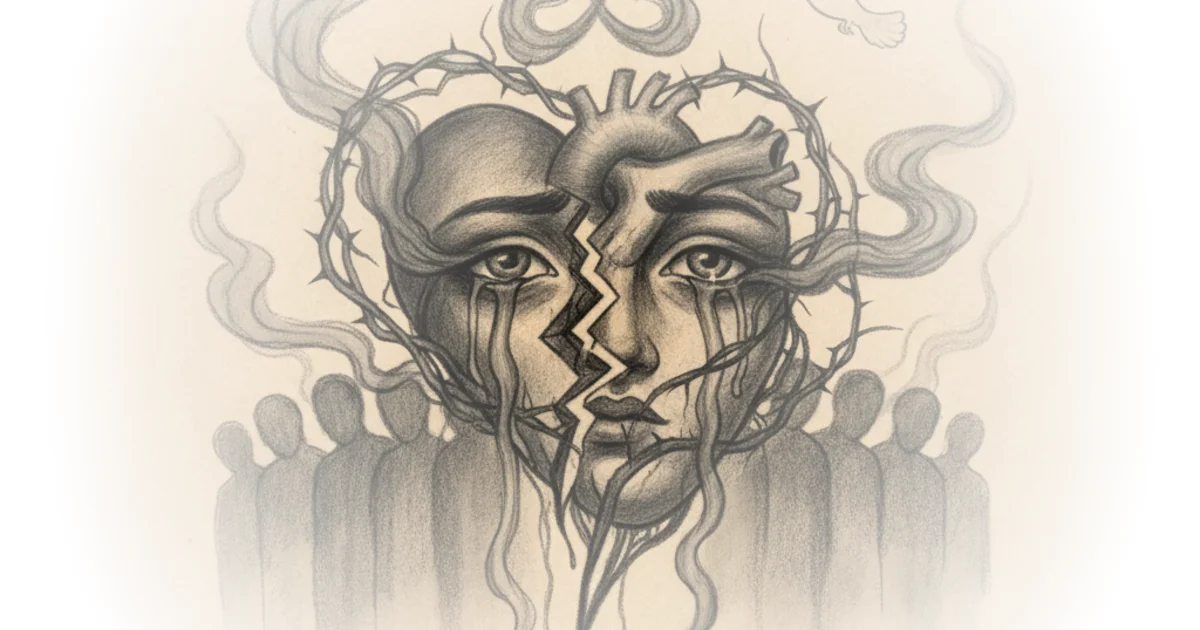
The commentary highlights a disturbing interaction between a reporter and Providence Mayor Brett Smiley. When pressed on how to stop the cycle of violence, the mayor deflected, yet he also revealed the grim reality of modern education by recalling a student who credited an active-shooter drill with saving their life. As Sarah Longwell, Tim Miller, and Kristol observe, "Active-shooter drills are a way of hardening our softest targets. They're also a way of hardening our hearts, accepting that to be a student in America is to be a victim-in-waiting." This is a devastatingly accurate description of the psychological toll of the status quo. The authors suggest that by normalizing these drills, we are essentially training the next generation to expect death.
Active-shooter drills are a way of hardening our softest targets. They're also a way of hardening our hearts, accepting that to be a student in America is to be a victim-in-waiting.
Critics might argue that immediate security hardening is a necessary stopgap while longer-term policy debates rage. However, the authors counter that without addressing the policy root, these measures merely create a false sense of security while the "blood-dimmed tide" continues to rise.
The Death of Truth and the Silence of Victims
The piece then pivots to a broader cultural critique, explaining why victims and survivors are increasingly unwilling to share their stories. Sarah Longwell, Tim Miller, and Kristol trace this silence to a toxic triad: the harassment of families after Sandy Hook, the erosion of media accountability, and a rising political correctness that views storytelling as "problematic." They note that after the Sandy Hook Elementary School shooting in 2012, families were "targeted, smeared, and plagued by lies and conspiracy theories promoted by charlatans posing as 'journalists.'" This historical context is vital; it explains that the current silence is a rational response to a media ecosystem that has turned grief into a weapon.
The authors describe a low-trust society where even well-meaning journalists are met with suspicion. They recount speaking with students who refused to be named because their parents warned them never to trust the press. "It's a terrible situation, and we're all shocked," one student said, noting that Brown, once known as the "Happy Ivy," has lost its innocence. The authors argue that the net effect of these forces is that "no one seems to believe in the power of the truth anymore." This is a profound observation on the fragmentation of shared reality. When truth is no longer a common currency, collective action becomes impossible.
The Ceremony of Innocence Drowned
Bill Kristol takes a more lyrical, somber turn, invoking W.B. Yeats' "The Second Coming" to capture the sheer scale of the weekend's tragedies. He connects the shooting at Brown, the attack on a Jewish community in Australia, and the murder of Rob and Michele Reiner in Los Angeles into a single narrative of collapse. "The cascade of murders of innocents this past weekend... hit home for me... with particular force," Kristol writes. He does not offer policy solutions here, but rather a space for mourning, acknowledging that words often fail in the face of such horror.
The emotional weight of the piece lands hardest when Kristol details the death of Alex Kleytman, an 87-year-old Ukrainian Holocaust survivor. Kleytman was killed in Sydney while shielding his wife, also a Holocaust survivor, during a Hanukkah celebration. "What can one say?" Kristol asks, before answering that we can only bow our heads and vow to remember. This specific historical reference to the Holocaust adds a layer of tragic continuity; it reminds the reader that the targeted violence against Jewish communities is not a new phenomenon, but a recurring nightmare that history has failed to cure. The authors suggest that the only path forward is a re-dedication to creating a world where such horrors are less likely, a call to action that is both simple and impossibly difficult.
The Political Theater of Denial
The commentary also examines the reaction of the Republican National Committee to a report on their own leadership's pessimism. Andrew Egger, writing for the group, details how the RNC lashed out at a story quoting their own chair, Joe Gruters, admitting the party faces "almost certain defeat" in the midterms unless they cling to the former president. The RNC's response—calling the reporting "stupid, desperate lies" and deleting their own audio clips—reveals a party that is more concerned with managing optics than addressing reality.
The authors speculate that this overreaction is not aimed at winning over undecided voters, but at currying favor with the executive branch. "Maybe they just know that the president hates Republicans talking down about the midterms and loves to see journalists getting dunked on," they suggest. This dynamic illustrates a dangerous feedback loop where political survival depends on appeasing a leader rather than governing effectively. The piece notes that pollsters are now warning that the leader is "fight-fight-fighting Marjorie Taylor Greene, and not actually fight-fight-fighting for Americans," highlighting a disconnect between the base's economic anxieties and the party's cultural warfare.
The problem is threefold: First, after Sandy Hook, we saw the families of victims targeted, smeared, and plagued by lies and conspiracy theories promoted by charlatans posing as 'journalists.'
Bottom Line
The strongest element of this commentary is its refusal to treat the Brown University shooting as an isolated incident, instead weaving it into a tapestry of global violence and domestic policy failure. Its greatest vulnerability lies in its diagnosis of "learned helplessness"; while accurate in describing the current mood, it offers few concrete mechanisms for breaking the cycle beyond a general call for truth and policy reform. Readers should watch for whether the administration's recent National Security Strategy, which critics say refuses to name key adversaries, signals a similar retreat from confronting hard truths about the world's dangers.