Matt Stoller delivers a rare and necessary diagnosis: the recent wave of left-wing primary victories isn't just a political upset, but a symptom of a deeper, structural rot where concentrated wealth is actively strangling democracy. While most observers focus on personality clashes or campaign tactics, Stoller argues we are witnessing the first tangible cracks in an oligarchic system that has long operated with impunity.
The Illusion of Choice
Stoller opens by highlighting a seismic shift in New York and Maryland, where entrenched Democratic incumbents were unseated by challengers running on platforms explicitly opposing corporate greed and foreign policy establishment. He notes that this wasn't a minor fluctuation; "The winners mostly ran on a platform of opposition to the U.S. alliance with Israel, as well as subordinate themes like opposition to corporate greed." The magnitude of these losses suggests voters are no longer satisfied with the status quo.
"This machine rarely loses, and never loses en masse. Yesterday, they did, as voters said no to the entire political establishment."
The author frames this not merely as a rejection of specific politicians, but as a reaction to a pervasive sense of powerlessness. He cites polling data showing that over half of Americans believe powerful people will always do whatever they want, regardless of the law or public will. This sentiment is amplified by the visible disconnect between the public mood and the actions of tech giants and financial titans. Stoller points out that this rage is growing even as figures like Elon Musk reach trillionaire status, creating a volatile political environment.
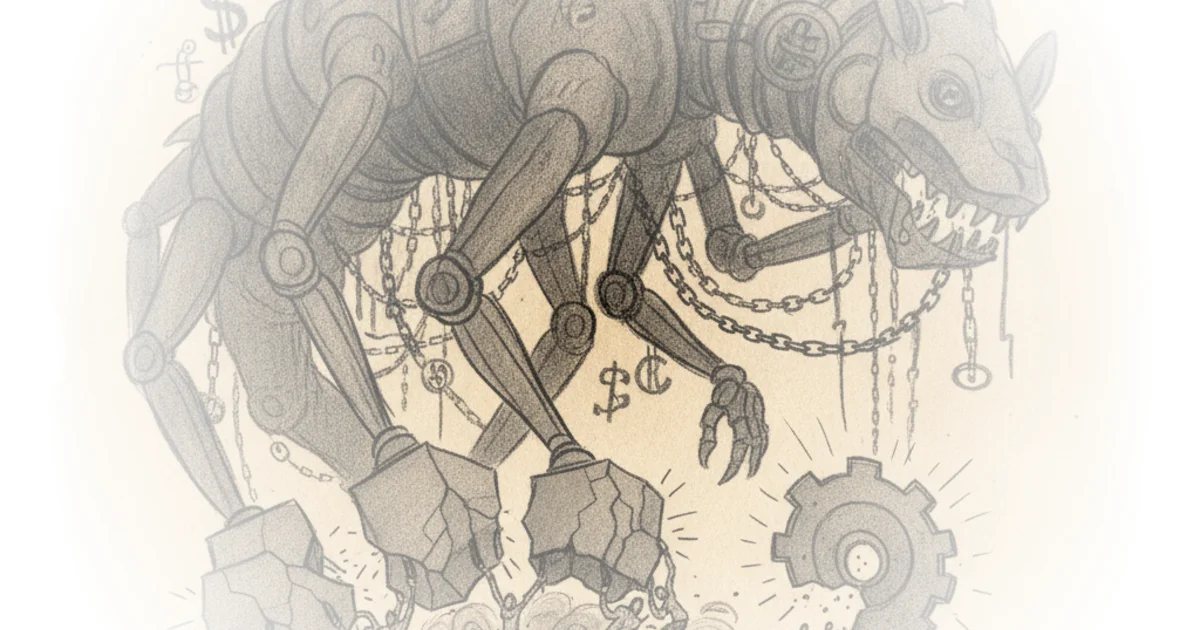
Drawing on recent economic research, including work by Nobel laureate Daron Acemoglu, Stoller warns that extreme wealth concentration creates an existential threat to democratic institutions. He invokes the warning of Louis Brandeis, noting that "we can have democracy in this country, or we can have great wealth concentrated in the hands of a few, but we can't have both." The argument here is stark: the tension between oligarchy and democracy is not theoretical; it is the defining struggle of our time.
Critics might argue that electoral volatility often stems from short-term economic dissatisfaction rather than a deep ideological shift against wealth concentration. However, Stoller's focus on the specific policy demands of the new winners suggests a more structural rejection of the current system.
The Trap of Empty Gestures
The commentary takes a sober turn as Stoller questions whether these electoral wins will translate into actual governance. He warns that without technical knowledge and institutional leverage, new leaders may be easily outmaneuvered by entrenched interests. He uses the example of Maryland Governor Wes Moore signing a bill against surveillance pricing, only for the law to be written by big retailers in a way that failed to stop the practice.
"It's not clear if politicians like Moore even know what they are saying isn't true. That's the worry, the 'oppose oligarchy' arguments won't turn into anything real."
Stoller suggests that the greatest risk is not a sudden coup, but a slow erosion of capability where elected officials simply lack the tools to govern effectively. He draws a historical parallel to Alexander Hamilton's control over an early Congress, noting how technical complexity can be used to neutralize populist mandates. This section serves as a crucial reality check: winning elections is only the first step; understanding the machinery of power is the second.
One Bite at a Time
Despite his mild pessimism about the immediate future, Stoller identifies a concrete path forward through a recent lawsuit in California against major gas retailers for price-fixing via algorithm. This case, he argues, demonstrates how populist governance can work in practice: not with grand speeches, but with granular legal enforcement.
"You don't attack these kinds of problems with abstract arguments, you attack them with law, details, and enforcement."
The piece details how software like Kalibrate allows gas stations to coordinate prices automatically, effectively creating a cartel without the need for a smoky backroom meeting. Stoller explains that this technology has driven up gas prices significantly in California, costing residents billions annually. The brilliance of his analysis lies in showing how a new California law (AB 325) and private enforcement mechanisms are being used to dismantle these digital cartels.
"So that's how you take down an oligarchy. One bite at a time."
Stoller highlights the ecosystem of anti-monopoly experts, former regulators, and journalists who have spent years building the legal frameworks necessary to fight this battle. He notes that while the federal government has struggled with enforcement, state-level initiatives and private litigation are creating a new playbook for restoring competition.
A counterargument worth considering is whether these state-level victories can scale against national monopolies with vast legal resources. Stoller acknowledges the difficulty, admitting it may take years to build a capable workforce of policymakers across all sectors before 2029. Yet, he insists that this slow, methodical work is the only way to prevent democracy from collapsing under the weight of concentrated wealth.
"Someone has to give shape to the vague bromides against corporate greed and oligarchy... The republic has not had a unified and capable set of policymakers and a populist political environment since the 1970s."
Bottom Line
Stoller's most compelling contribution is reframing the fight against oligarchy from a cultural battle into a technical, legal one, showing exactly how algorithms are used to fix prices and how new laws can stop them. While his skepticism about the immediate capacity of new leaders is well-founded, his roadmap for incremental legal enforcement offers a rare glimpse of hope in an otherwise grim political landscape.