This conversation between Jordan Schneider and Oxford professor Roel Konijnendijk cuts through the noise of modern film criticism to ask a question rarely posed about Christopher Nolan's The Odyssey: what happens when we force ancient heroes to confront the moral rot of their own victories? In an era where adaptations often sanitize history to fit contemporary sensibilities, the pair argues that true fidelity to the source requires preserving the uncomfortable, dissonant reality of a world where glory and atrocity are inextricably linked.
The Cost of Modern Morality
Schneider and Konijnendijk challenge the prevailing trend of retrofitting ancient texts with modern ethical frameworks. They suggest that by making Odysseus a man who regrets his violence, filmmakers risk erasing the very thing that made the original epic so terrifyingly human. Konijnendijk notes that while the film's set pieces are "competently done," the moral shift is where the adaptation struggles to find its footing. "The poem is 12,000 lines — way too long to be one movie — so you have to make choices about what to keep and what to leave out, and those choices have to be sensitive to what the story is trying to say," Konijnendijk observes. The problem arises when the story's core message becomes "not Homeric in any sense," imposing a modern guilt that the original characters never felt.
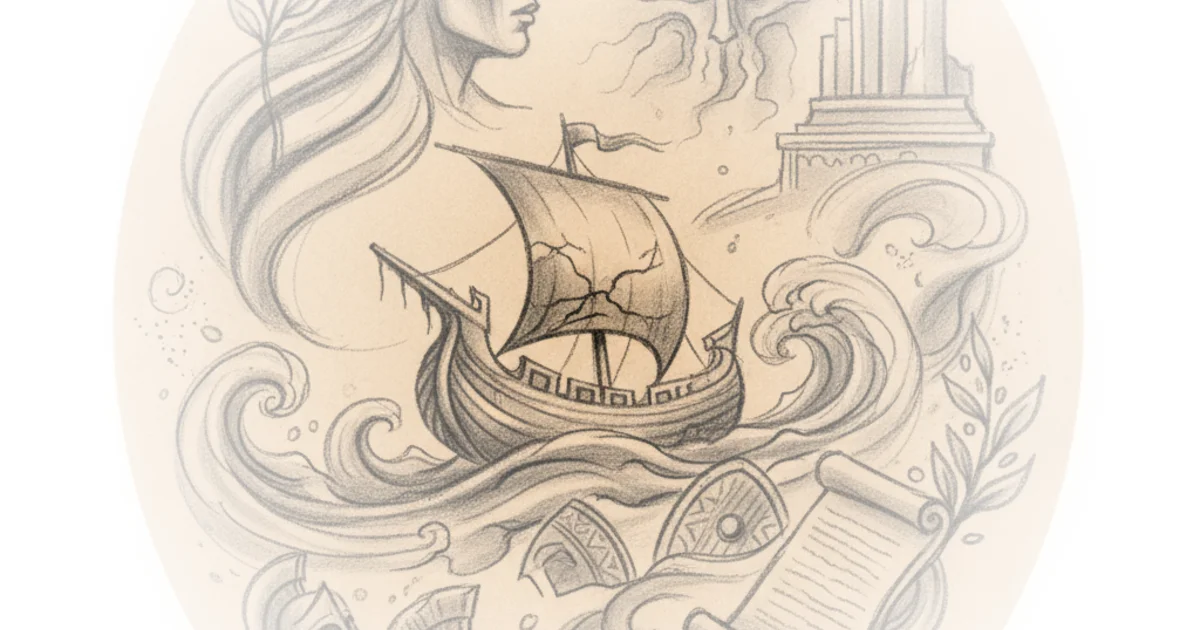
The discussion highlights a specific, jarring moment in the film—a puppy thrown off a cliff—that briefly captures the alien nature of ancient morality before the narrative retreats to safe, modern ground. "I really liked it when they threw a puppy off the cliff at the beginning. That one brief moment illustrates that this is not a world like ours — the morality here is different," Konijnendijk argues. This fleeting scene serves as a stark reminder that the ancient world operated on a different axis of value, one where the sacking of a city was a source of glory, not shame. "In Homer, that is unequivocally good. That's what you're supposed to do as a Homeric hero," Schneider points out, emphasizing that the modern discomfort with this reality is a feature of our time, not a flaw in the text.
"They treat the world around them differently. But that idea wasn't followed through. The movie didn't stick with the notion that these people think differently about what it means to be a good person."
Critics might argue that a purely historical approach renders the story inaccessible to modern audiences, but the authors suggest that the tension between ancient glory and modern empathy is precisely where the story's power lies. The film's attempt to make Odysseus question his own leadership style—specifically his manipulation of his crew—shifts the focus from the horror of war to the psychology of the commander. "Odysseus is being forced to confront the question: if you deceive the people around you in order to get what you want — including the people who look up to you — you're still deceiving them," Konijnendijk explains. While this adds a layer of psychological complexity, it risks missing the broader point: that in the ancient view, the ends often justified the means, and that dissonance is the tragedy itself.
The Unavoidable Suffering of War
The conversation pivots to the human cost of conflict, drawing a direct line from the Odyssey to the tragedies of fifth-century Athens. Schneider and Konijnendijk remind us that the ancient Greeks were not blind to the devastation they wrought; they simply lived with the contradiction. "On the one hand, they glorify victory in war... But at the same time, already in Homer, there's a recognition that war brings endless suffering," Konijnendijk states. This duality is not a modern invention but a fundamental aspect of the Greek worldview, one that playwrights like Phrynichus explored with devastating effect. The authors reference the lost play about the sack of Miletus, which was so distressing to the Athenian audience that the state fined the playwright and banned it, proving that the emotional toll of war was understood even in its most celebrated moments.
The discussion also touches on the Melian Dialogue and the brutal logic of power, contrasting the Homeric impulse with the later realization that "despotism — the weak suffering what they must — is actually not the morally just thing." This historical context adds weight to the film's portrayal of the Trojan War, suggesting that the true horror lies not in the monsters Odysseus fights, but in the cities he destroys. "They all remembered what they had done to all the other Greek states — because it meant they expected nothing less from the Spartans now that they were at their mercy," Konijnendijk says, describing the moment the Athenians realized their own hubris would be their undoing. This historical echo transforms the Odyssey from a simple adventure story into a meditation on the cyclical nature of violence and retribution.
The authors also note that the film's inclusion of Sinon, a character from Virgil's Aeneid, allows for a more nuanced exploration of betrayal and command responsibility. "The sin came from the design of the attack itself," the discussion suggests, shifting the blame from the individual soldier to the architecture of the war. This reframing is compelling, yet it risks oversimplifying the ancient view of agency. "Do you deserve people's trust? Do you deserve people following you and looking up to you? That's a more compelling way of looking at how Odysseus achieves things than the poem, which straightforwardly says, 'that's just how he is,'" Konijnendijk notes. The film's attempt to moralize the amoral is a bold move, but it may ultimately dilute the raw, unfiltered power of the original myth.
Bottom Line
Schneider and Konijnendijk offer a vital corrective to the tendency to sanitize ancient epics for modern consumption, arguing that the true value of the Odyssey lies in its refusal to offer easy moral answers. Their analysis reveals that the most profound insights into war and leadership come not from imposing modern guilt on ancient heroes, but from confronting the terrifying reality that glory and atrocity have always been two sides of the same coin. The biggest vulnerability in their argument, however, is the assumption that modern audiences can truly engage with a morality that feels so alien; without some bridge of empathy, the story risks becoming a mere historical curiosity rather than a living, breathing warning.
"You can commit atrocities all you want in your moment of power and ascendancy, but the bill is being recorded. Eventually there's going to be a reckoning."
The strongest part of this piece is its insistence on the duality of the ancient Greek experience: the simultaneous capacity for great love and great violence. This tension is not a problem to be solved but a reality to be endured, and it is here that the Odyssey remains as relevant today as it was two millennia ago. What to watch for next is how future adaptations will navigate this delicate balance, and whether they can find a way to honor the past without sanitizing its horrors.