Robert Pondiscio delivers a startling counter-narrative to the prevailing educational orthodoxy: the relentless focus on trauma and systemic failure in schools is not empowering students, but actively training them for civic withdrawal. By reframing optimism not as naive denial but as a prerequisite for democratic engagement, he challenges the very foundation of how modern curricula are constructed. This is a rare intervention that moves beyond policy tweaks to question the psychological architecture of the classroom itself.
The Cost of "Free" and the Gift of Investment
Pondiscio opens with a visceral classroom anecdote that dismantles the assumption that public education is a right with no price tag. He describes handing high school seniors an invoice for the quarter-million dollars spent on their K-12 schooling, a move designed to reveal the hidden social contract. "No one had ever invited them to see school as a gift, as their civic inheritance, as a sign that the world might be for them, not against them," he writes. This moment of revelation is the crux of his argument: schools are failing to show students that strangers are investing in them, thereby missing a crucial opportunity to foster gratitude and a sense of belonging.
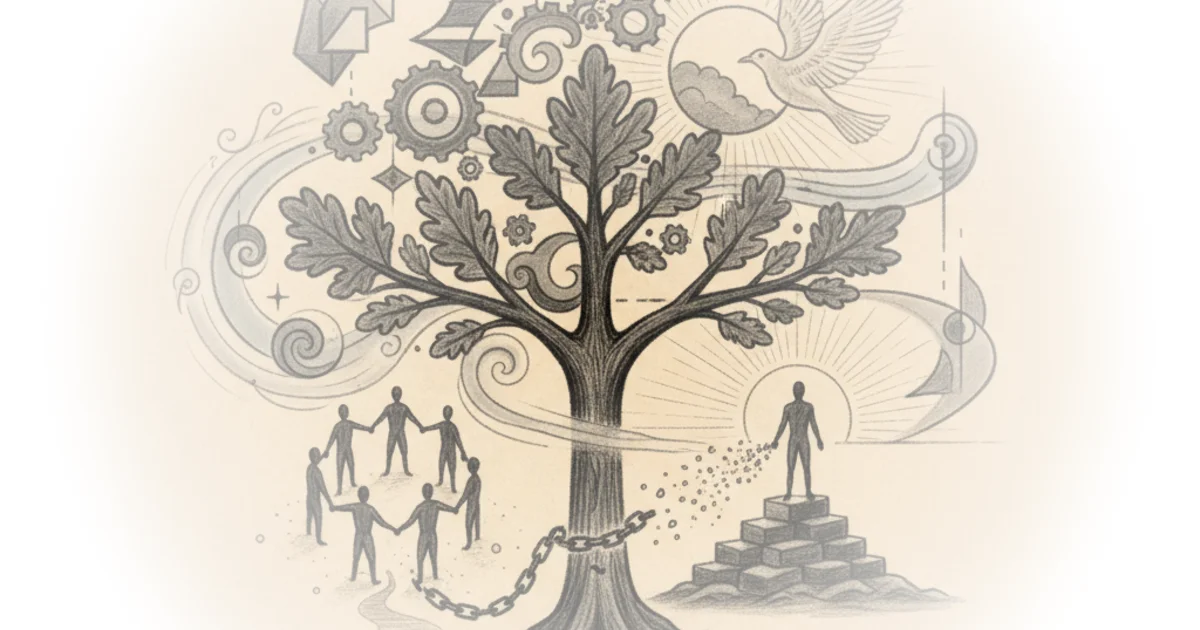
The author argues that this omission is not accidental but structural. He contends that educators have adopted a "relentlessly bleak view of the world" under the guise of authenticity. "In English language arts, 'authenticity' has led us toward canonizing young adult literature obsessed with trauma, abuse, dystopia, self-harm, and catastrophe," Pondiscio observes. He suggests that by prioritizing the depth of wounds over literary merit or cultural significance, schools are implicitly teaching that suffering is the defining human experience. This framing is powerful because it names a specific pedagogical choice that often goes unexamined: the belief that exposing children to the worst of humanity is the only way to be honest.
Critics might argue that ignoring systemic injustice in the name of optimism is a form of gaslighting that leaves students unprepared for reality. However, Pondiscio anticipates this, insisting that truth-telling does not require a monopoly on despair. He posits that the current approach is not just unhelpful but counterproductive, creating a generation that feels the world is stacked against them before they have even begun to engage with it.
The hidden message—never stated, but always present—seems to be that suffering is the most defining and universal human experience.
The Psychology of Primal Beliefs
Moving from curriculum to cognitive science, Pondiscio introduces the work of psychologist Jeremy Clifton, whose research on "primal world beliefs" offers a scientific basis for his critique. These beliefs are our deepest assumptions about whether the world is safe, enticing, or just. Pondiscio highlights a counterintuitive finding that upends standard educational psychology: "It appears that our experiences do not shape our primal world beliefs. Our primals shape how we interpret our experiences. Primals are the lens, not the photograph."
This distinction is vital. It suggests that telling children the world is dangerous does not make them more realistic; it makes them more likely to interpret neutral events as threats. Pondiscio notes that holding a bleak view predicts "less success, less life satisfaction, worse health, more depression, and increased suicide attempts." Conversely, those who view the world as safe and meaningful show greater resilience. He uses this to argue that the current educational emphasis on doom is not a protective measure but a potential source of harm. "If we have convinced ourselves that we are protecting or preparing children by teaching them to view the world as bad, we might be doing exactly the opposite," he writes.
Here, Pondiscio draws a parallel to the concept of Pascal's Wager, applying it to school climate. He frames the choice between an optimistic and pessimistic school culture as a rational bet. If we wager on hope, the worst-case scenario is naivety; if we wager on despair, the worst-case scenario is a generation too lethargic to participate in democracy. "No child has ever been inspired by despair. Not once, in nearly two centuries of public education, has a student thought, 'Everything is collapsing! Institutions are corrupt! The planet is burning! I should probably do my homework,'" he asserts. This blunt assessment of human motivation cuts through the moral posturing that often surrounds "action civics."
The argument gains further depth when viewed through the lens of learned helplessness, a concept explored in companion analyses of this topic. Just as learned helplessness teaches subjects that their actions have no effect on outcomes, a curriculum saturated with unfixable societal failures can teach students that their civic engagement is futile. Pondiscio's invocation of Clifton's research provides the mechanism for this: if the world is perceived as fundamentally broken, the rational response is withdrawal, not action.
What stops great quests to discover buried treasure is not the snakes and the pirates—it is the expectation that there is little to nothing of value that is probably buried out there in the sand.
From Performance to Molds of Character
The final section of Pondiscio's argument addresses the role of the institution itself. He critiques the shift in schools from being "molds" of character to "platforms" for adult anxieties and political performance. "Teaching is not performance. It's not therapy. It's not activism. It is the quiet, steady, faithful work of forming human beings," he writes. This distinction is crucial for busy readers who may feel overwhelmed by the expectation that schools must solve every societal ill. Pondiscio argues that when schools become platforms for adult grievances, they fail their primary function: to provide a stable environment where children can develop the confidence to engage with the world.
He suggests that charter schools and schools of choice have a unique opportunity to model a different kind of civic engagement—one rooted in competence, striving, and gratitude rather than outrage. "We cannot expect children to invest in a world we've spent years signaling or telling them is unworthy of their affection or investment," he concludes. The lesson of the invoice returns here: if the first encounter with a public institution is one of stability and investment, students are more likely to trust and join the broader civic project.
A counterargument worth considering is whether this focus on optimism risks glossing over the very real inequalities that marginalized students face daily. Pondiscio addresses this by distinguishing between acknowledging hardship and adopting a worldview of doom. He calls for a balance where children learn that the world includes injustice but also contains beauty and opportunity. The challenge lies in implementation: how to maintain rigor and truth-telling without tipping into the despair that paralyzes civic action.
Children will rise to meet the world they believe they're inheriting.
Bottom Line
Pondiscio's strongest contribution is his synthesis of psychological research with educational practice, proving that the tone of a classroom is not merely a mood but a structural determinant of civic outcomes. His argument's vulnerability lies in the difficulty of shifting a culture that has equated "honesty" with the exposure of trauma, but his call to reframe optimism as a civic virtue offers a necessary and actionable path forward. The most critical takeaway is that schools must stop modeling withdrawal and start modeling the confidence required to build a future.