This archived piece from 2008 arrives with uncanny prescience, framing a crisis not as a failure of markets but as the inevitable result of how we outsourced our economy to an unelected priesthood. Brad DeLong argues that while politicians loudly declaim about growth and jobs, the true levers of power rest in the hands of a "technocratic priesthood" sitting around a table in Washington. For the busy listener trying to make sense of today's economic volatility, this historical snapshot reveals that the current friction between democratic mandates and central bank independence is not a glitch—it is the system's design.
The Philosopher-Prince in the Eccles Building
DeLong opens by dismantling the illusion of presidential control over the economy. He writes, "In the middle of our market economy sits an island of central planning, the Federal Reserve." This metaphor is striking because it forces us to confront a paradox: we live in a democracy that has voluntarily surrendered its most critical economic decision—the price of money—to a single institution. The author notes that no president or Congress dares challenge the power of its chairman, Ben Bernanke, describing him as "the closest thing to a central economic planner the United States has ever had."
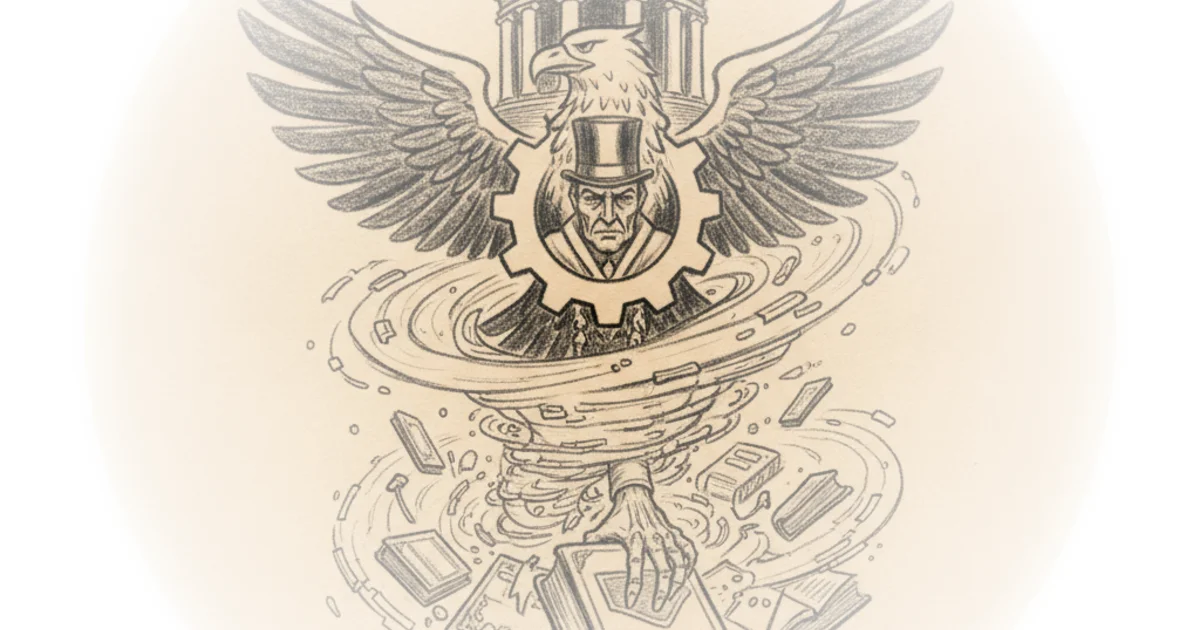
The commentary here is sharp: DeLong suggests that the Federal Reserve's authority stems not from a grand constitutional design but from a century and a half of "historical accidents, improvisations, and panics." He traces this back to the 1844 debate in Britain over the Bank of England, where Prime Minister Robert Peel refused to legalize emergency lending powers, preferring instead a system where the central bank acted illegally during crises to prevent total collapse. This historical context is vital; it reminds us that the modern Federal Reserve's ability to set interest rates and rescue banks was built on a foundation of necessary illegality and improvisation.
"We do not live in the Republic of Plato, or even in the Republic of the Bond Market; we live, to a remarkable extent, in the Republic of the Central Banker."
DeLong argues that this arrangement creates an "immense island of central planning in the middle of a market ocean." He points out that while politicians campaign on promises of jobs and growth, their room for maneuver is "sharply circumscribed by what the central bank will tolerate." This dynamic was particularly acute during the 2008 financial crisis, where Bernanke's role as a "moral-philosopher-prince" became paramount. The author highlights Bernanke's unique background as an academic who studied the Great Depression, noting that his primary motivation was avoiding the specific mistake of allowing banks to fail.
The Legacy of the Great Depression and Real Bills
The piece delves into the intellectual lineage of the Federal Reserve Chair. DeLong writes, "Avoiding the mistakes made during the Great Depression is Bernanke's highest priority." He recounts a famous moment where Bernanke told Milton Friedman, "You're right, we did it. We're very sorry. But thanks to you, we won't do it again." This admission underscores a profound shift in central banking philosophy: the belief that liquidity crises must be met with aggressive intervention to prevent the destruction of the banking system's knowledge base.
However, DeLong also hints at the fragility of this approach. He notes that the current system is the product of "a long series of historical accidents" rather than a coherent democratic mandate. This connects to the broader debate surrounding the Real Bills Doctrine—the idea that banks should only lend against short-term commercial paper—which historically limited central bank flexibility during panics. By contrast, the modern Fed's willingness to act as a lender of last resort represents a rejection of those older constraints, yet it leaves the system dependent on the judgment of a few individuals.
Critics might note that DeLong's focus on Bernanke's academic pedigree risks overlooking the structural incentives that drive central bankers toward risk aversion or excessive caution. While the author praises Bernanke as "extremely bright" and a "first rate expert," this reverence for technocratic expertise can sometimes obscure the political accountability gaps inherent in the system.
The Uneasy Argument of Discretion
As DeLong looks forward from 2008, he warns that the patterns of central bank dominance are not going away. He writes, "Seventeen years on, you will recognize the patterns... but the underlying structure is the same." The core tension remains: how much discretion do we want our "philosopher-princes" to have? The author suggests that while the specifics change—different shocks, different acronyms, different chairs—the fundamental power dynamic persists. Politicians continue to declaim about growth while knowing their hands are tied by the Federal Reserve's tolerance levels.
This framing is particularly relevant today, as debates over inflation and employment often devolve into a battle between elected officials and unelected governors. DeLong captures this perfectly: "The fate of the economy in the next administration depends far less on the president than on this moral-philosopher-prince to whose judgment we have entrusted a remarkable share of control over our destiny." The piece serves as a reminder that the Humphrey–Hawkins Full Employment Act, which legally mandated the Fed to pursue maximum employment and stable prices, has not diminished the central bank's autonomy; instead, it has given the Fed a dual mandate that often clashes with political short-termism.
"In normal times, the Fed -- not the market -- decides what the short-term interest rate is... We leave that decision to the discretion of the philosopher-prince Bernanke and his committee."
The author's choice to describe the Federal Reserve as an "island of central planning" is provocative but accurate in its description of how monetary policy functions. It challenges the popular narrative of free markets by highlighting that the most important price in the economy is administered, not discovered.
Bottom Line
Brad DeLong's 2008 analysis remains a powerful diagnostic tool for understanding modern economic governance: we have built a system where democratic legitimacy is secondary to technocratic stability. The strongest part of this argument is its historical grounding, showing how crisis management evolved into permanent central planning. Its biggest vulnerability lies in assuming that the "philosopher-prince" will always act with the public interest at heart; history suggests that even well-intentioned experts can misjudge the balance between inflation and employment. As we navigate future economic shocks, the question is not whether the Republic of the Central Banker exists, but how we might hold its rulers accountable without triggering the very panics they are sworn to prevent.