Novara Media cuts through the dominant Western narrative that the Iranian diaspora is a monolith of war supporters, revealing a fractured community where the loudest voices are often the most extreme. In a landscape where media platforms amplify pro-war sentiment as the sole legitimate Iranian perspective, this piece offers a crucial corrective by centering the silenced anti-war majority and exposing the fascist undercurrents of the monarchist movement. It forces the reader to confront a uncomfortable truth: the push for regime change is being driven not by a broad democratic consensus, but by a coordinated effort to erase nuance and history.
The Illusion of Consensus
The article begins by dismantling the assumption that the Iranian diaspora uniformly backs military intervention. Novara Media highlights the jarring reality of diaspora rallies in Vancouver, London, and Los Angeles that celebrate a conflict causing massive civilian casualties. They quote a prominent pro-war talking head, Massie Alenad, who claims, "This is the wararmonger regime in Iran. They are the root cause of the war," while asserting that over 32,000 people were killed in less than 24 hours—a figure the author immediately flags as factually baseless. This contrast is vital; it shows how the most visible voices often rely on hyperbole and misinformation to justify escalation.
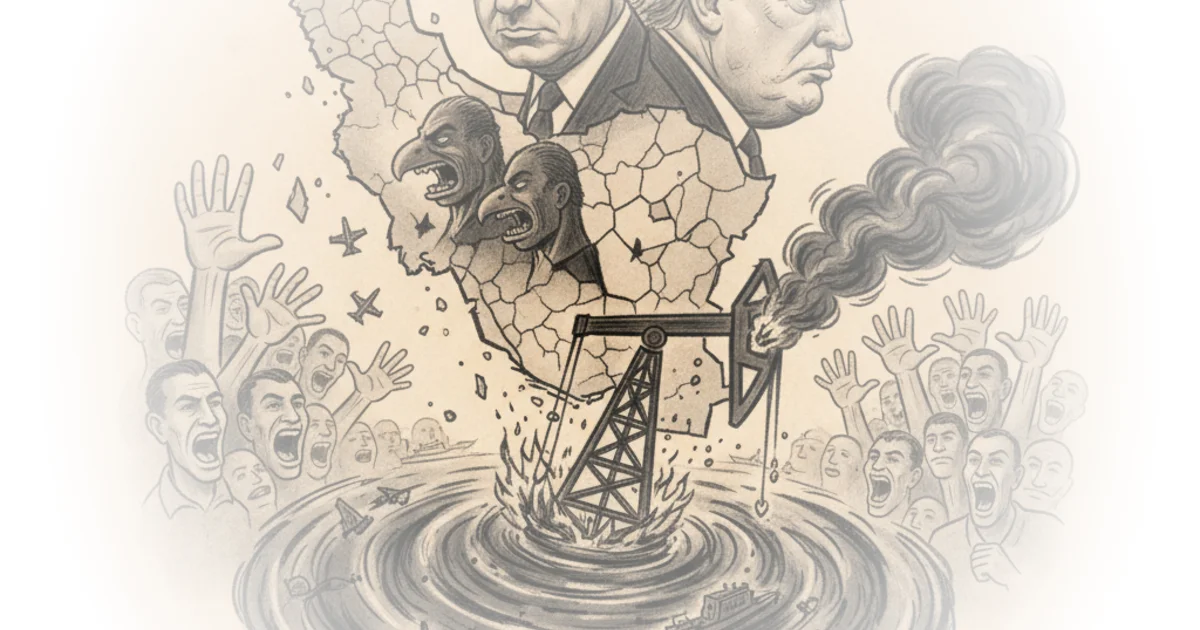
The author points out that while figures like Alenad dominate the airwaves, polling from the National Iranian American Council (NAIC) tells a different story. As Novara Media notes, "New polling from the National Iranian American Council suggests that when asked whether they support the war, Iranian-Americans are about evenly split." This data point is the anchor of the piece, grounding the emotional rhetoric in hard numbers. It suggests that the media's portrayal of a unified front is a fabrication. Critics might argue that polling conducted before the full scale of the conflict is outdated, but the author anticipates this, noting that as the reality of bombing sets in, anti-war sentiment is likely surging, potentially shifting the split to 70-30 against the war.
"They want to create this image that the entire Iranian diaspora supports the war. It's to gaslight you."
The Mechanics of Erasure
The commentary then shifts to the mechanisms used to silence dissent. Novara Media interviews Mad Ali Shakad, a Persian teacher and social media voice, who describes a terrifying environment where anti-war voices are doxed, threatened, and legally harassed. Shakad explains that the media selectively platforms those who fit a specific narrative: "The people who support regime change war are put in the forefront. They're always interviewed. They're supposed to be representative of all of us." This selective amplification creates a feedback loop where the most extreme views are mistaken for the majority opinion.
The author draws a sharp parallel to other diasporas, noting that activists from Bahrain or Saudi Arabia are rarely heard from in the West, while anti-government voices from dictatorial states are ignored. Novara Media writes, "If you are in a position where your country has a contentious or maybe good relationship with America, certain segments of the diaspora are highlighted." This structural bias explains why the complexity of the Iranian situation is flattened. The piece argues that this isn't accidental but a deliberate strategy to manufacture consent for war by presenting a false binary: either you support the bombing or you are a lackey of the Islamic Republic.
The Fascist Undercurrent of Monarchism
Perhaps the most provocative section of the article is its dissection of the Palavi movement, often romanticized in the West as a liberal democratic alternative. Novara Media, through Shakad's testimony, peels back the "English smoke screen" of the movement to reveal a far-right, ethno-nationalist core. The author details how figures like Jason Reszo Gorgani, a founder of the alt-right, promote the idea that "Iran was a white Aryan nation and it was invaded and polluted by yellow Asians and brown semmites." This rhetoric is not fringe; it is central to the movement's base.
The article connects this ideology to historical precedents, noting that the Palavi government once hosted a runaway SS officer who fought in Nazi Germany. Novara Media writes, "So this isn't even foreign to the kind of the state ethos of the uh the Palivist." This historical reference adds a layer of gravity to the accusation of fascism, moving it from a political slur to a documented pattern of behavior. The author also highlights the movement's hostility toward ethnic minorities and leftists, quoting Shakad on how Kurds and Marxists are labeled "traitors" or "polluters." This challenges the Western liberal fantasy that the Palavi movement represents a progressive future for Iran.
"In English it's oh, you know, coexistence, peace, we're liberal... And then in Hebrew, in Persian, in Spanish, whatever diaspora we're talking about, it's death to them."
The Human Cost of Simplification
The piece concludes by returning to the human cost of this political simplification. Novara Media recounts the tragedy of Ozadi Square (Freedom Square), a historic site bombed in the conflict, and the irony of using a symbol of freedom to destroy a nation's cultural heritage. The author quotes a poignant reflection on the square's history, noting how it was built to commemorate the 2500-year anniversary of the Persian monarchy, only to be threatened by the very monarchists who claim to defend it. This narrative arc underscores the danger of reducing a complex geopolitical struggle to a simple "good vs. evil" story.
The author argues that the push for war is not just a strategic error but a moral failure that ignores the voices of those who would suffer most. By centering the experiences of those who are being silenced—leftists, ethnic minorities, and ordinary citizens—the article restores a sense of agency to the Iranian people that the media narrative strips away. It suggests that true solidarity means listening to the anti-war voices within the diaspora, not just the ones that align with Western foreign policy interests.
Bottom Line
Novara Media's most powerful contribution is its refusal to accept the media's manufactured consensus, instead revealing a deeply polarized and often terrified diaspora where the loudest voices are the most dangerous. While the piece relies heavily on the testimony of a single interviewee, the historical context regarding the Palavi movement's fascist roots and the specific polling data from the NAIC provide a robust foundation for its claims. The biggest vulnerability lies in the difficulty of verifying the extent of the doxing and threats in real-time, but the pattern of silencing dissent is consistent with broader trends in political discourse. Readers should watch for how the media narrative shifts as the war drags on and the initial wave of pro-war enthusiasm inevitably collides with the reality of destruction.