This review dismantles the comforting tropes that usually surround Holocaust narratives, replacing sentimental redemption with a chilling study of human denial. Scott Alexander argues that the true horror of The Escape Artist isn't just the brutality of the camps, but the terrifying ease with which the world refused to believe the truth, even when it was staring them in the face.
The Anti-Hero of History
Scott Alexander immediately sets a difficult tone, noting that "You won't find any of these tropes in The Escape Artist." The book follows Walter Rosenberg, a Slovak teenager who voluntarily enters Auschwitz not out of ignorance, but as a calculated gamble for freedom. Alexander highlights the protagonist's unique, almost jarring psychology: "If Walter were alive today, one gets the sense he'd describe himself as high-agency and everyone else as NPCs." This framing is crucial because it strips away the passive victimhood often assigned to Holocaust survivors in popular media. Instead, we are presented with a man who is "allergic to authority" and relentlessly focused on escape, a trait that makes him an outlier even among the desperate.
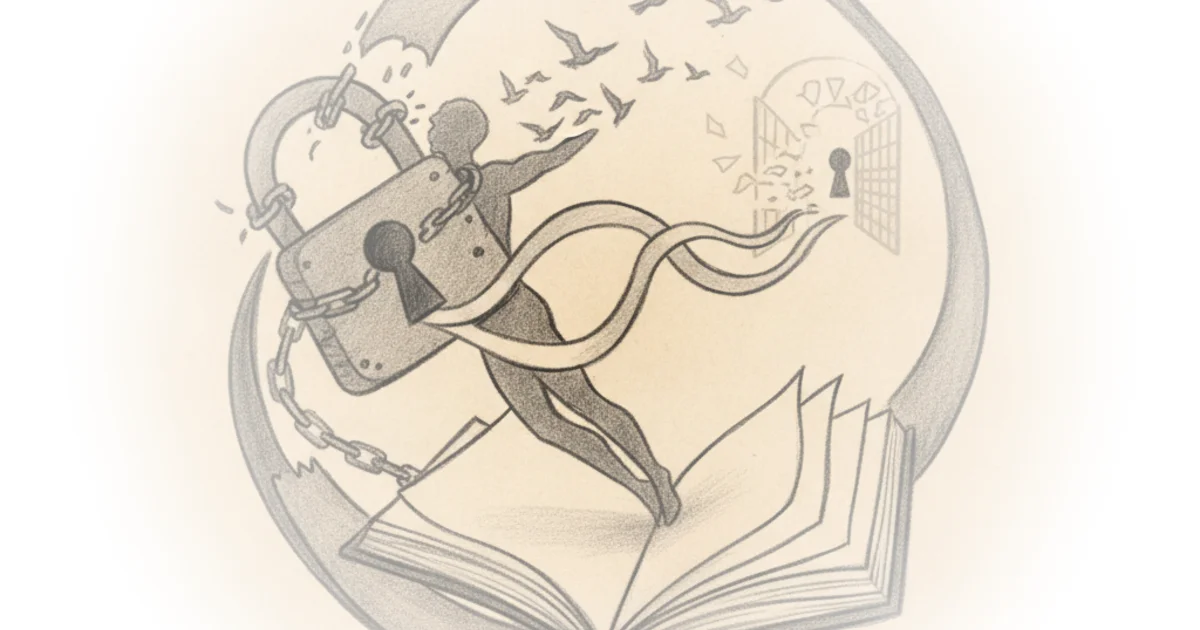
The narrative choice to focus on such a "deeply unlikeable protagonist" forces the reader to confront a uncomfortable reality: survival often requires a moral flexibility that looks like selfishness from the outside. Alexander writes, "Its deeply unlikeable protagonist eventually alienates every friend and supporter he has, and dies a bitter old man, almost completely forgotten by history." This lack of a redemptive arc is the book's most radical departure from the norm. It suggests that the trauma of the Holocaust didn't just kill people; it broke the very machinery of human connection for those who remained.
There's no redemption here, no moral uplift, no lessons save for perhaps the grimmest and most nihilistic "lesson" I've ever encountered in any story: that when confronted with the unthinkable, most people's natural tendency is denial.
The Mechanics of Deception
The review shifts to the specific mechanics of how the Holocaust was hidden in plain sight. Alexander details Rosenberg's transfer to the "Canada" section of Auschwitz, a euphemism for the area where prisoners sorted the belongings of the murdered. Here, the sheer scale of the operation becomes undeniable. "Every arrival at Auschwitz who is not selected for work—the vast, vast majority, over 90%—is killed," Alexander notes, explaining how the sorting of artificial limbs and teeth provided the irrefutable proof Rosenberg needed.
This section is particularly powerful because it illustrates the bureaucratic banality of evil. The Nazis didn't just kill; they organized the theft of human remains with the efficiency of a logistics firm. Alexander points out that "the bureaucracy-obsessed Nazis in fact placed the entire concentration camp apparatus in the SS's economic office." The horror lies in the fact that the system was designed to be self-sustaining, fueled by the very people it destroyed.
The most haunting moment Alexander describes involves a prisoner shouting warnings to new arrivals, only to be reported by a mother who believed the Nazi lie of "resettlement." "The officer, never breaking character, notes the offending prisoner's number and profusely apologizes for the disruption," Alexander writes. "Of course, except for Walter and the SS officer, everyone in this story... is dead within the next thirty minutes." This anecdote underscores a terrifying dynamic: the victims were often complicit in their own destruction because the deception was so total. It mirrors the dynamics seen in other historical accounts, such as the Auschwitz Protocols, where the first detailed reports of the gas chambers were met with skepticism by Jewish leaders and Allied officials who could not conceive of such industrialized murder.
Critics might argue that focusing on the "denial" of the victims risks shifting blame away from the perpetrators. However, Alexander's point is not to blame the victims, but to explain why the escape of the truth was so difficult. The machinery of the state was designed to make the unbelievable seem mundane.
The Failure of the Mission
The review concludes by addressing the ultimate tragedy of Rosenberg's story: his escape was a tactical success but a strategic failure. "In his own telling, it's a failure, for although he makes it out of Auschwitz against all odds, he fails at his larger mission: to stop the Holocaust," Alexander observes. This reframing challenges the standard narrative of survival as a triumph.
The administration of the time, and the broader international community, failed to act on the information Rosenberg brought back. The review suggests that the "natural tendency is denial" was a feature, not a bug, of the human condition when faced with atrocities that exceeded the bounds of imagination. This connects to the broader historical context of figures like Rezső Kasztner, who faced similar dilemmas in trying to negotiate with the Nazis, often finding that the world preferred comforting lies to terrifying truths.
When confronted with the unthinkable, most people's natural tendency is denial.
The argument here is that the story of the Holocaust is not just one of German evil, but of a global failure of imagination. The "good German" or "good non-German" archetypes are absent in this account, replaced by a stark reality where the only thing that mattered was the ability to see the truth and the courage to act on it.
Bottom Line
Scott Alexander's review is a masterclass in subverting expectations, using a true story to expose the psychological barriers that allowed the Holocaust to continue unchecked. Its greatest strength is the refusal to offer a comforting moral, forcing the reader to sit with the uncomfortable reality that denial is a powerful, often fatal, human instinct. The biggest vulnerability of this approach is its potential to induce despair, yet it remains essential reading for understanding why the world failed to stop the unthinkable.