Michael Macleod delivers a masterclass in local investigative journalism that peels back the layers of London's daily life, revealing how bureaucratic overreach, financial opacity, and construction failures converge to disrupt ordinary citizens. This piece is notable not for a single headline, but for its forensic dissection of how historic bylaws are weaponized against cyclists, how profitable family businesses hide behind council planning rhetoric, and how modern housing developments crumble under the weight of their own structural flaws.
The Speed Trap Paradox
Macleod opens with a jarring contradiction: a local council deploying speed guns, technology usually reserved for motor vehicles, to fine cyclists in a park. He writes, "Park police employed by Wandsworth council have been handing out £50 penalty notices to cyclists who break a 12mph speed limit in Tooting Bec Common, in what is an incredibly unusual deployment of technology normally reserved for cars." This framing immediately highlights the absurdity of the enforcement, suggesting a solution in search of a problem rather than a genuine safety crisis.
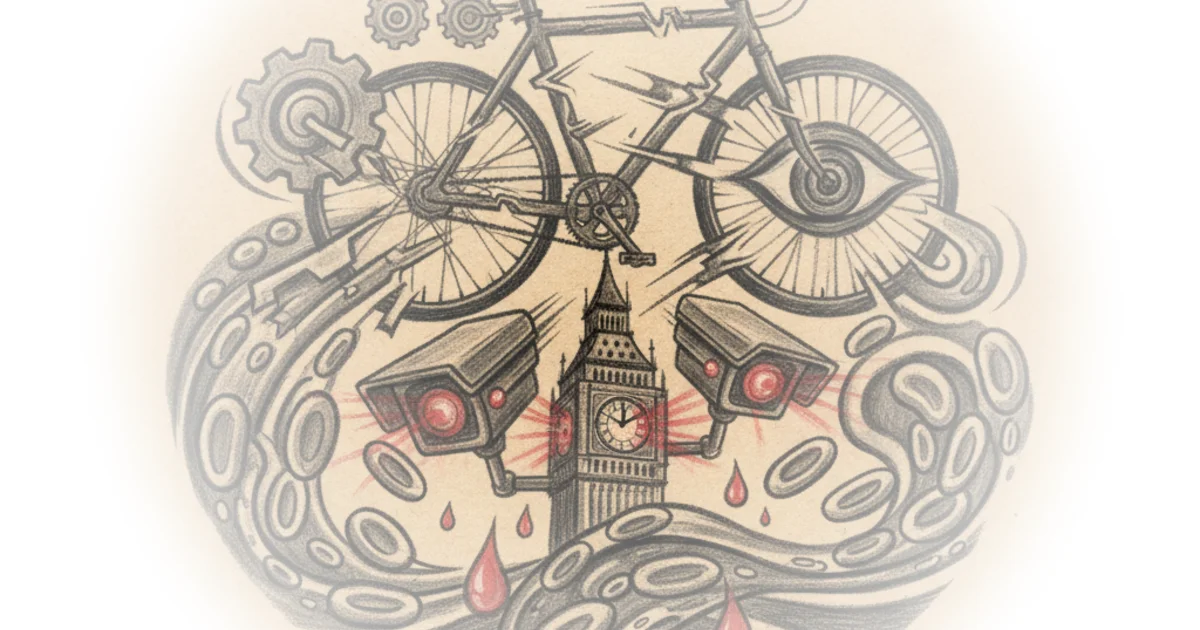
The author traces the legal basis for this crackdown to obscure regulations, noting that "some local authorities retain historic and often forgotten byelaws relating to bicycle speeds" which often date back to the era of the old Greater London Council. This historical context is crucial; it reminds readers that these rules are relics, not modern safety standards. Macleod points out the practical impossibility of compliance for the average rider, arguing that "very few cyclists have a speedometer so have no way of knowing precisely how fast they are going." This creates a scenario where the law is effectively unknowable to those it punishes.
"It struck me that this was a very confrontational way to do this. Maybe they should cycle around and show people what 12mph looks like."
The piece balances this critique with the perspective of the enforcement group, the Friends of Tooting Common, who warn that the status quo is a "serious accident or fatality waiting to happen." Macleod acknowledges the validity of concerns regarding illegally modified e-bikes used by thieves, which can reach 30mph, yet he effectively argues that blanket fines on all cyclists miss the mark. A counterargument worth considering is whether the council's hesitation to target only the most dangerous offenders stems from a lack of resources to distinguish between a commuter on a standard bike and a thief on a modified moped.
The Illusion of Housing Crisis
Shifting focus to North London, Macleod dismantles the narrative surrounding the potential redevelopment of Rowans, a beloved bowling alley in Finsbury Park. He observes that while the Haringey council's draft local plan lists the site for potential housing, the reality is far more nuanced. "Rowans has had a similar public status as a potential development site for the last decade under the existing local plan," he notes, suggesting the current panic is cyclical rather than new.
The investigation digs into the financials, revealing a stark contrast between the council's need for land and the private owner's success. Macleod writes, "Londoners spent £6.8m at Rowans during the 2023/24 financial year, producing a very healthy profit," which allowed the Nagle family to pay themselves "a combined £3.65m in salaries and dividends." This data point shifts the blame for the potential loss of the venue from the council to the owners' strategic decisions. The author concludes that the fate of the site "will rest largely on the intentions of those two Nagles and their heirs, rather than the council." This reframing is vital; it exposes how public discourse often blames government planning when the real leverage lies with private capital.
The Cost of Commuting
On the topic of transport, Macleod cuts through the noise of a headline fare increase to show the uneven distribution of the burden. While the average rise is cited as 5.8%, the author explains that "the big percentage rises are going to people who travel off-peak, especially if your journey takes place entirely outside Zone 1." This detail is essential for the busy commuter trying to budget, as it reveals that peak-time travelers are relatively shielded while those with flexible schedules or living further out face the brunt of the hike. The piece wisely defers to long-term data collectors like Diamond Geezer to provide the historical context that a single news cycle cannot offer.
Structural Failures in the Halo
The most harrowing section of the article concerns the Halo development in Stratford, where residents are being evacuated due to structural unsafety just before Christmas. Macleod captures the human toll with precision, describing residents "panic-cooking their festive food and bidding farewell to decorated Christmas trees they won't see again until the spring." The narrative connects this current crisis to the post-2012 Olympic legacy, where Sebastian Coe promised "new, quality" homes, only for the reality to be a building plagued by cracks, water ingress, and falling glass.
The author details a litany of failures, from cladding that fell below fire safety standards to windows cracking under sunlight exposure. "Rain blew in through the wall," one resident tells Macleod, illustrating the severity of the exposure during the pandemic. The housing association, Notting Hill Genesis, initially assured residents of safety with "temporary propping," but the situation deteriorated until evacuation became the only option. Macleod notes the irony that residents were asked to bear the cost of a replacement lift due to a legal dispute between contractors, highlighting a system where tenants subsidize corporate failures.
"You'd go down there and there'd be closed off bits where there'd be jacks propping things up."
This quote encapsulates the hidden nature of the crisis. The building was held together by temporary measures while official communications insisted "everything's fine." The author's decision to include the resident's attempt to bake sourdough bread as a final act of normalcy before evacuation adds a layer of emotional gravity that statistics cannot convey. Critics might argue that the piece focuses heavily on the emotional impact rather than the specific engineering solutions being proposed, but the human cost is the primary story here, and the delay in remediation is the real villain.
Bottom Line
Michael Macleod's coverage succeeds by refusing to accept official narratives at face value, whether it is the justification for fining cyclists, the urgency of a housing plan, or the safety assurances of a housing association. The strongest element is the forensic use of financial records and historical bylaws to reveal the true power dynamics at play. The piece's greatest vulnerability lies in the lack of a clear path forward for the displaced residents, leaving the reader with a sense of unresolved injustice that is all too common in modern London. Watch for the outcome of the Nagle family's decision on Rowans and the timeline for the Halo remediation, as these will test the resilience of London's community institutions.