This piece pulls back the curtain on a high-stakes corporate campaign disguised as culinary advocacy, revealing how celebrity chefs became the public face of an industry desperate to block a ban on "forever chemicals." Emily Atkin exposes a startling disconnect: the very voices telling Californians that nonstick pans are essential for affordable cooking are the same ones profiting from their sale. For busy readers tracking the intersection of public health and corporate influence, this is a masterclass in how lobbying groups manufacture consent by co-opting trusted cultural figures.
The Celebrity Shield
Atkin's reporting centers on a coordinated effort by seven high-profile chefs to intervene in California's legislative process regarding polytetrafluoroethylene (PTFE), the chemical compound behind brands like Teflon. The narrative arc is sharp and damning. Just as Governor Gavin Newsom was poised to sign a bill phasing out these pans, a wave of identical letters arrived, arguing the ban was "alarmist, unnecessary, and unfair to home cooks." Atkin writes, "Their message was polished, unified, and amplified across national media." The effectiveness of this strategy relied entirely on the chefs' perceived neutrality, a facade Atkin systematically dismantles.
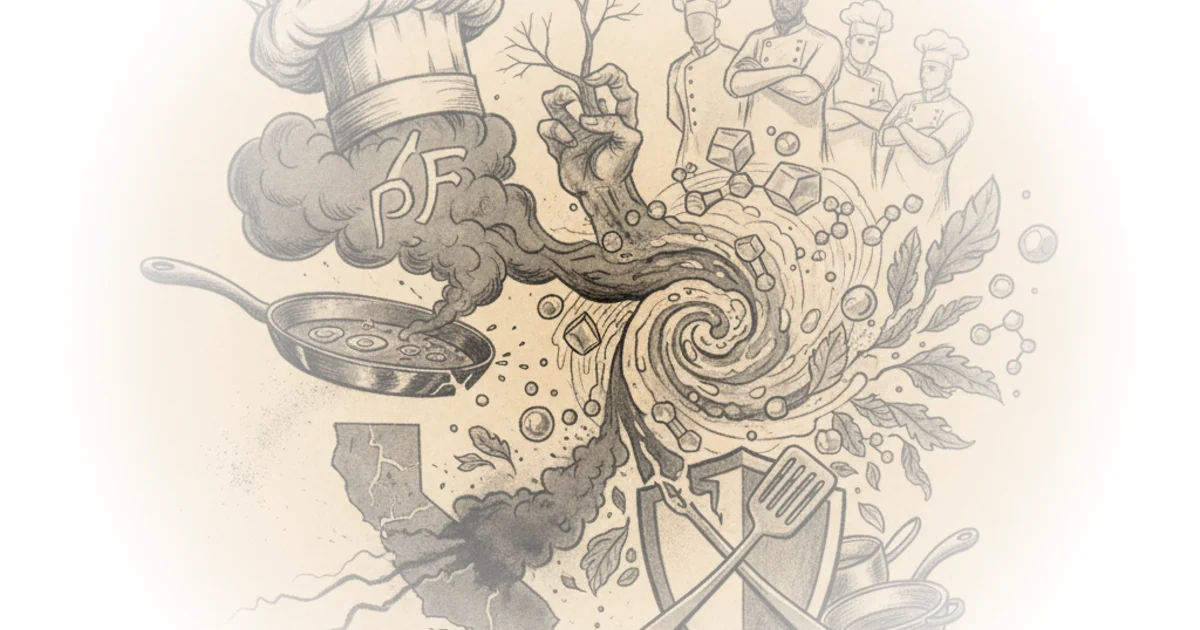
The investigation reveals that every chef who signed these letters has a direct financial stake in the very products they defended. Rachael Ray, who called PTFE-coated pans "a key component of durable, affordable nonstick cookware," sells her own bestselling line of such pans. David Chang, who warned of "unnecessary burdens on the very families we all want to support," markets a nonstick line that explicitly discloses the presence of PFAS. Thomas Keller and Marcus Samuelsson similarly omitted their lucrative partnerships with cookware manufacturers while warning that the ban would hurt professional kitchens.
"The reason the chefs' letters aligned so cleanly with the CSA's talking points is, in retrospect, unsurprising: They all have financial relationships with companies that produce and sell PTFE-coated pans."
This framing is the piece's most potent element. It shifts the debate from a technical discussion about cooking safety to a clear conflict of interest. Critics might argue that the chefs were simply sharing their professional expertise on the utility of nonstick surfaces, regardless of their business ties. However, Atkin's evidence suggests a calculated strategy: using celebrity capital to lend credibility to a lobbying group, The Cookware Sustainability Alliance (CSA), which is funded by the very manufacturers selling these pans.
The Manufacturing Mirage
The article then pivots to the core scientific and ethical debate, dissecting the CSA's argument that PTFE is distinct from the "bad" PFAS chemicals like PFOA and PFOS. Steve Burns, the CSA president, asserts, "There's between 12,000 and 15,000 chemicals that are considered part of the PFAS group... The one that coats cookware is fluoropolymers, PTFE, Teflon. And we believe it to be safe." On a technical level, the industry is correct that the finished polymer is stable and inert when used properly. However, Atkin expertly contextualizes this claim by looking at the entire lifecycle of the product, not just its use in a kitchen.
The piece draws a powerful parallel to historical contamination scandals, noting that the production of Teflon relies on processing aids like PFOA and GenX. These are the same compounds that devastated communities in Parkersburg, West Virginia, and North Carolina, where facilities released toxins into water supplies for decades. Atkin quotes researcher Rainer Lohmann, who describes the production process as a "messy and dirty process" that creates "sacrifice zones." Lohmann offers a chilling analogy: "You can think of [a Teflon pan] like a blood diamond. The diamond is beautiful, but the production has a trail of misery."
This historical context is crucial. While the CSA argues they are "two steps removed from the source" and that the chemical industry should bear the blame, Atkin highlights the counter-argument from public health advocates. They contend that downstream users cannot ignore the origins of the materials they sell. The argument that cookware is merely a minor consumer of these chemicals compared to industrial uses is technically true, but it misses the point of direct human exposure. As policy director Gretchen Salter notes, "The problem with PFAS is not just the exposure that you get from the actual product itself... but you have to look at the whole life cycle of PFAS."
A National Strategy
The scope of Atkin's investigation expands to show that California was merely the latest battleground in a coordinated national defense. The CSA, formed in 2024, has already successfully lobbied to remove cookware from bans in New Mexico and Illinois and delayed implementation in Vermont. The group spent hundreds of thousands of dollars lobbying state capitals, proving that the celebrity letters were just the public face of a well-funded political machine. Atkin notes that the French conglomerate SEB, a major CSA member, had already fought a similar battle in France, stripping cookware from their national PFAS legislation.
The ultimate victory for the industry came when Governor Newsom vetoed the California bill, echoing the chefs' concerns about affordability. "I am deeply concerned about the impact this bill would have on the availability of affordable options in cooking products," Newsom wrote. Atkin points out the irony that the industry successfully framed a public health measure as an economic threat, a tactic that has become a hallmark of environmental regulation debates. Senator Ben Allen's press secretary, Ben Cheever, pushes back against this framing, stating, "We've been quite adamant about how environmental policy is getting used as a scapegoat for affordability issues right now."
"You can think of it like a blood diamond. The diamond is beautiful, but the production has a trail of misery."
The piece effectively illustrates how the "affordability" argument is often a smokescreen for protecting profit margins. While the CSA argues that banning PTFE would drive up prices, advocates counter that the long-term costs of healthcare and environmental cleanup far outweigh the price of switching to ceramic alternatives. The silence of the chefs when contacted for comment speaks volumes about the fragility of their position.
Bottom Line
Emily Atkin's reporting delivers a definitive takedown of the narrative that celebrity chefs are acting as disinterested guardians of the home cook. The strongest part of this argument is the forensic linking of financial incentives to public policy positions, exposing a sophisticated lobbying strategy that relies on celebrity trust. The biggest vulnerability in the industry's defense remains the refusal to acknowledge the human cost of manufacturing these "safe" products. Readers should watch for how this playbook—using celebrity endorsements to deflect from lifecycle toxicity—will be deployed in other states as the fight over forever chemicals moves forward.