Steve Vladeck exposes a dangerous escalation in political rhetoric that threatens the very independence of the American judiciary, moving beyond mere criticism to a coordinated campaign of intimidation. While the news cycle was consumed by government shutdowns and SNAP benefits, the real story emerged from a Federalist Society convention where the second-highest official in the Department of Justice declared a "war" on the courts. This is not standard political posturing; it is a calculated effort to delegitimize the constitutional check that has proven most effective against the executive branch's most controversial policies.
The Rhetoric of War
Vladeck zeroes in on the incendiary language used by Deputy Attorney General Todd Blanche, noting that the repetition of the word "war" was anything but accidental. Blanche told an audience of young lawyers, "There’s a group of judges that are repeat players, and that’s obviously not by happenstance, that’s intentional, and it’s a war, man." He further argued that the administration cannot win unless it fights back against what he termed a "travesty" where a single judge can halt an entire constitutional policy.
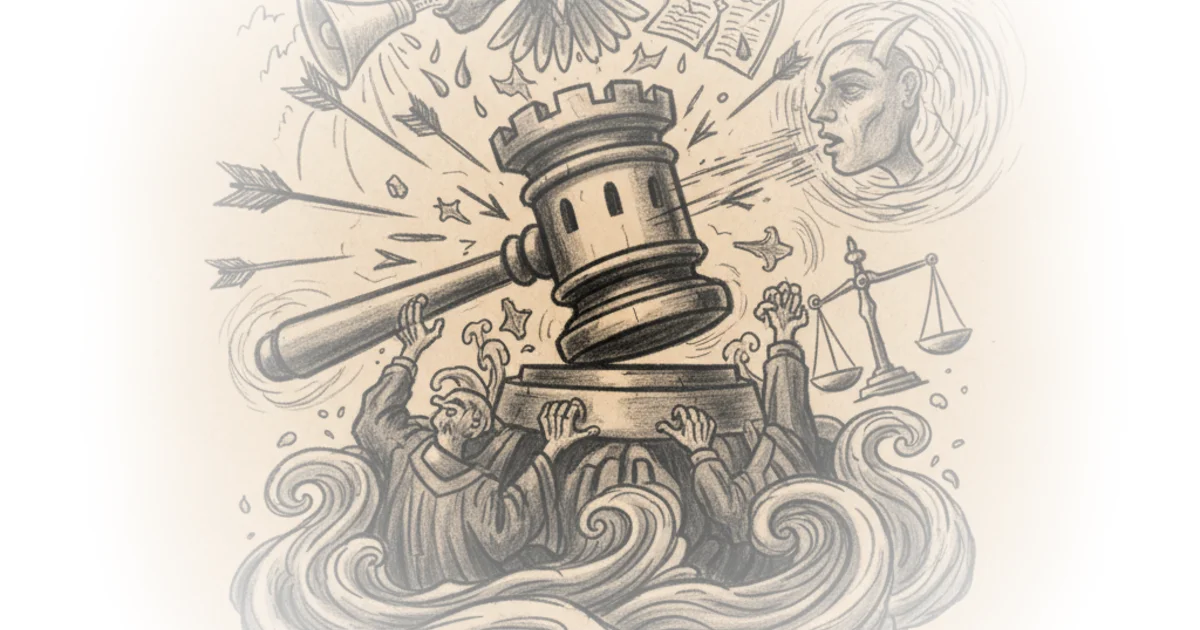
This framing is deeply concerning because it reframes judicial review as an act of insurrection rather than a core function of the rule of law. Vladeck points out that this rhetoric is not isolated; it aligns with misconduct complaints filed by the Attorney General and threats of impeachment hearings by the Senate Judiciary Committee. The administration is effectively weaponizing the Department of Justice to attack the judiciary, a move that Vladeck describes as "unbecoming of anyone in the employ of the Department of Justice, let alone its top two officials."
It would be one thing if there were any substance to their charges, but there isn't.
The author argues that this strategy is designed to erode public faith in the courts and, more dangerously, to increase the real-world threats faced by judges. By labeling routine legal opposition as a "war," the executive branch is inviting hostility toward the bench. This is a stark departure from the norms observed between 2021 and 2025, where such attacks were largely confined to fringe commentators rather than the nation's top law enforcement officials.
The Data vs. The Narrative
To dismantle the administration's claim of a "rogue" judiciary, Vladeck deploys a rigorous data analysis that contradicts the narrative of a small group of liberal activists. He writes, "It is just not true, by any remotely objective measure, that the rulings adverse to the Trump administration are coming from a small subset of 'liberal' district court judges in a handful of district courts." His research, compiled with research assistants, identifies 204 distinct cases where federal district courts ruled on requests for relief against the administration.
The numbers tell a different story than the one being sold in Washington. Of the 154 rulings that went against the administration, they came from 121 different judges across 29 district courts and 10 circuits. Crucially, 41 of these adverse rulings were issued by Republican-appointed judges, including 15 appointed by the current president himself. Vladeck notes that the grant rate for adverse rulings among Republican appointees was 62%, a figure that defies the administration's attempt to paint these judges as political outliers.
This data is particularly potent because it highlights a systemic check on power rather than a partisan conspiracy. The author emphasizes that more than a quarter of the adverse rulings came from judges appointed by Presidents Reagan, George W. Bush, and Trump. This suggests that the issue is not the ideology of the bench, but the nature of the policies being challenged. Critics might argue that the sheer volume of litigation indicates judicial overreach, but Vladeck counters that the administration's own data shows they often choose not to appeal or seek emergency relief, suggesting they know their cases are weak.
It's not just that rulings adverse to the Trump administration have come from 121 different district judges spread across the country... it's that 41 of those cases have been presided over by 30 judges appointed by Presidents Reagan, George W. Bush, and Trump.
The commentary draws a parallel to the historical context of the Federalist Society, which has long sought to reshape the judiciary. However, the current administration's approach mirrors the tactics used by right-wing lawyers during the Biden administration, creating a cycle of hypocrisy that Vladeck finds "shameless." The author notes that the silence from conservative legal scholars and groups regarding these attacks is a "profound (and growing) discredit" to the conservative legal movement.
The Emergency Docket and Institutional Stress
Beyond the rhetoric, the piece touches on the frantic pace of the Supreme Court's emergency docket, which has become a battleground for administrative overreach. Vladeck observes that "Ten years ago, this amount of emergency docket behavior would've been a story unto itself. In 2025, it's just another week at the Court." This normalization of crisis mode underscores the strain on the judiciary as it attempts to manage the executive branch's aggressive legal strategies.
The author highlights specific cases, such as the dispute over the Library of Congress's status as an executive agency and the challenge to California's climate disclosure laws, as examples of the administration testing the limits of executive power. The sheer volume of emergency applications forces the Court to operate in a reactive mode, often issuing rulings without the benefit of full briefing or oral argument. This dynamic risks turning the Supreme Court into a super-appellate court for administrative disputes, bypassing the normal judicial process.
Bottom Line
Vladeck's most compelling argument is that the administration's "war" on judges is a strategic move to dismantle the institutional checks that have successfully blocked its most lawless policies. The strongest part of the piece is the irrefutable data showing that Republican-appointed judges are just as likely to rule against the administration as their Democratic counterparts, shattering the myth of a partisan judiciary. The biggest vulnerability in the administration's stance is its reliance on a narrative that is easily disproven by public records, yet its persistence suggests a willingness to sacrifice institutional integrity for short-term political gain. Readers should watch for whether the silence from conservative legal elites continues to break, or if this rhetoric successfully normalizes the erosion of judicial independence.