Yascha Mounk delivers a stinging diagnosis of a cultural institution that many assumed was immune to decline: The New Yorker. His most provocative claim isn't that the magazine has changed, but that it has fundamentally lost its soul, trading its historic commitment to the obscure and the human for a safe, celebrity-obsessed insularity. In an era where digital media demands constant reinvention, Mounk argues that the publication has done the opposite, retreating into a walled garden of its own making while the world outside moves on.
The Ghost of Eustace Tilley
Mounk begins by highlighting the jarring disconnect between the magazine's self-perception and its reception among younger, digital-native readers. When the storied publication recently announced its arrival on Substack, the reaction was not the warm embrace of a legacy brand but open hostility. "Oh FUCK OFF please," wrote one user, a sentiment echoed by others who view the magazine as an "artifact, no longer relevant to our time." Mounk captures this friction perfectly, noting that the magazine's attempt to be "fun and sophisticated" now feels like a parent who abandoned a child returning to demand friendship.
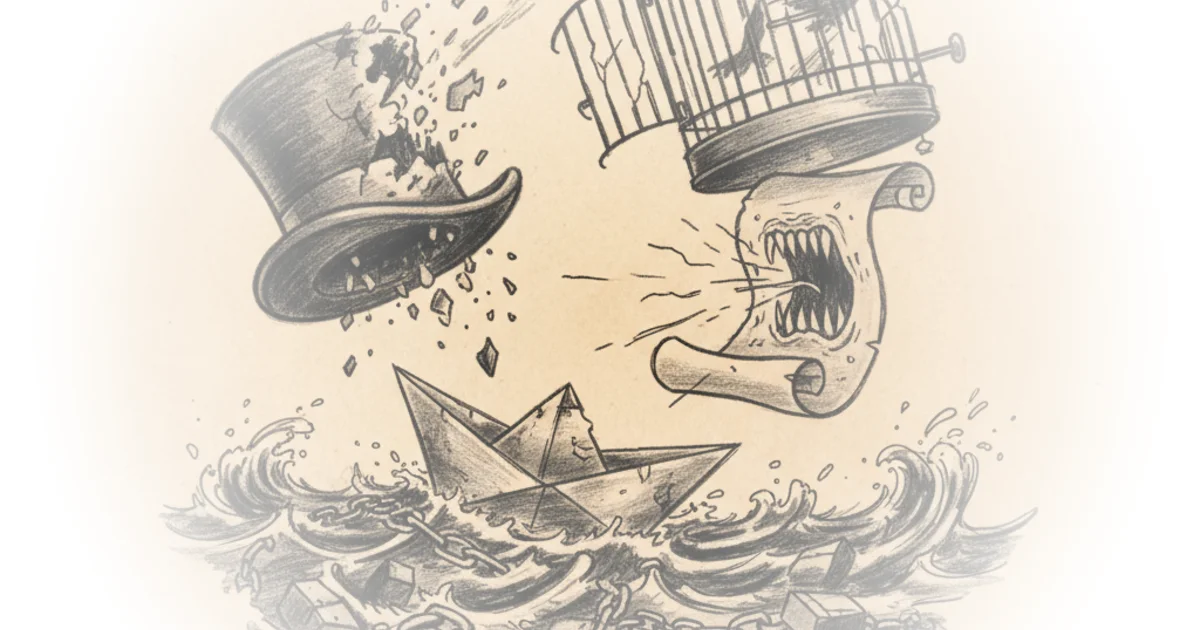
The core of Mounk's argument rests on a historical pivot. He reminds us that The New Yorker was not always the bastion of high culture it is today. Founded "on champagne vapor" by the Algonquin Round Table, its early years were rife with "racist cartoons" and "sophomoric jokes." It was only in the 1930s, with the arrival of streetwise writers like Joseph Mitchell and A.J. Liebling, that the magazine found its true voice. Mounk points to the 1946 decision to dedicate an entire issue to John Hersey's account of the destruction of Hiroshima as a defining moment of seriousness, contrasting it sharply with the magazine's current output.
"The New Yorker... is no longer for or about anybody you know."
This historical context is vital. Just as the Algonquin Round Table eventually gave way to a more diverse and serious literary landscape, Mounk suggests the magazine has now circled back to its worst instincts. The "lowlife" that was once ascendant—the ability to find profound humanity in a Bowery bum or a soup vendor—has been replaced by a focus on those who have already "arrived." The magazine no longer discovers talent; it curates the already famous.
The Walled Garden
Mounk identifies a specific, structural failure in how the magazine now operates: the closure of its doors to unsolicited work. He contrasts the legendary persistence of Ann Beattie, whose career was launched after a fiction editor personally championed her work from the slush pile, with the current reality. "Bill Buford, who was The New Yorker's fiction editor for eight years, admitted that he hadn't taken a single story from slush during that time," Mounk writes. Today, the magazine maintains an open inbox only as a "masquerade," while the real path to entry requires an agent or an existing reputation.
This shift has created a "stale, safe, walled garden of forgettable fiction." Mounk illustrates this with a telling anecdote from an editorial meeting where a story was dismissed for being "right on that borderline of being like ten other stories," met with a tepid "I'd be borderline in favor." The result is a publication that feels interchangeable with Vanity Fair, obsessed with profiles of celebrities like Cynthia Nixon or Chloe Zhao rather than the "Naked Cowboy's father" or the "Man Behind the Soups."
Critics might note that the media landscape has changed drastically; social media now breaks news instantly, and the "talk of the town" gossip model is less necessary. However, Mounk counters that this should have pushed The New Yorker toward deeper, more unique analysis, not toward a predictable "superior moralism" that even satirists like Charlie Kaufman have mocked. The magazine's attempts to connect with the American heartland often come across as "embarrassingly tone-deaf," reinforcing the perception of the staff as "elitist motherfuckers."
The Loss of the Breakthrough
The argument culminates in the loss of the magazine's most vital function: breaking stories that define the cultural moment. While Mounk acknowledges successes like Ronan Farrow's reporting on Harvey Weinstein, he challenges readers to name a recent piece that has captured the discourse in the way the magazine used to routinely do. "Try to think of the last time The New Yorker has broken a story or captured the discourse in a way that used to be routine for them," he asks, suggesting the answer will be a long silence.
The magazine has become, in Mounk's view, a "gilded gargoyle on the cathedral of polite thinking." It retains the logo, the covers, and the cartoons, but the spirit that once allowed it to transform journalism by finding the extraordinary in the ordinary is gone. As Mounk puts it, "The New Yorker is a miracle, ok?" is the mantra of the current leadership, but for many, the miracle has faded into a terminal decline.
"It is still masquerading as the magazine that discovered Beattie and profiled Gould, but in fact the real path to entry is to already be a part of whatever club Eustace Tilley is a member of."
Bottom Line
Yascha Mounk's critique is a powerful reminder that institutional prestige is not a shield against irrelevance; it is a trap if it prevents an organization from evolving with its audience. The strongest part of his argument is the stark contrast between the magazine's history of discovering the overlooked and its current obsession with the already-famous. The biggest vulnerability in his case is the difficulty of proving a negative—demonstrating the absence of a specific spirit in a publication that still produces high-quality work. Readers should watch to see if the current leadership can break the cycle of insularity or if The New Yorker will remain a museum of its own past.