This Pennsylvania Supreme Court decision isn't just a legal technicality; it is a stark admission that the machinery of justice has been compromised by ideological overreach. Reason highlights a disturbing pattern where a local prosecutor's office, in its zeal to overturn convictions, has abandoned the duty of candor, effectively handing the keys to the prison cell back to inmates without factual basis. The court's intervention suggests that when the state's advocate stops acting as a check on power and starts acting as an agent of policy change, the entire judicial process collapses into farce.
When the Prosecutor Becomes the Plaintiff
The piece opens with a chilling observation from Justice Kevin Dougherty regarding the unique role of a prosecutor: "A prosecutor bears the responsibility of a minister of justice and not simply that of an advocate." This distinction is the bedrock of the American legal system, yet Reason reports that the Philadelphia District Attorney's Office has systematically ignored it. The court found that the office conceded relief in over 100 murder cases since 2018, often without any legal justification, driven instead by "personal, political, ideological, policy, or other non-legal reasons."
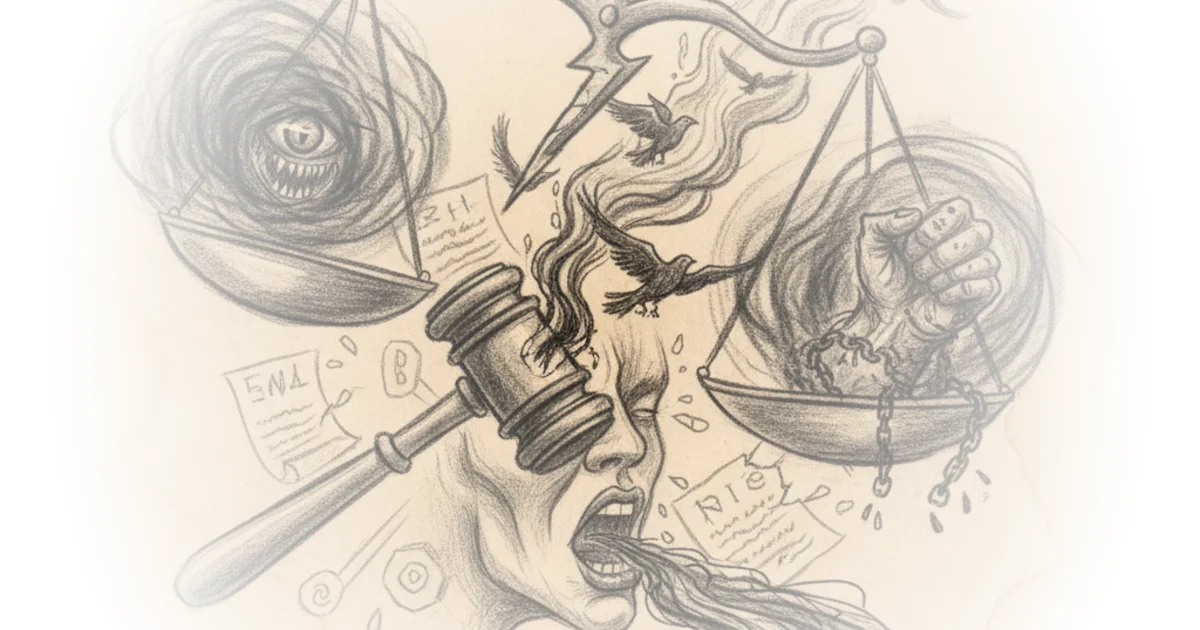
This is not a minor procedural error; it is a fundamental breakdown of the adversarial system. As the piece notes, "When the prosecutor sides with a defendant, there generally is no adversarial testing of the defendant's entitlement to relief." Without an opposing voice to challenge facts or expose misrepresentations, the judge is left blind, forced to rely on a record that may be incomplete or outright false. The court found the District Attorney's office "withheld material evidence," "submitted a false stipulation of fact," and "failed to conduct a reasonable investigation."
When relief is not dictated by the record and law but merely advocated for personal, political, ideological, policy, or other non-legal reasons, a prosecutor's concession does not minister justice; it facilitates injustice.
The implications here are profound. In a system designed to balance the scales, removing one side of the scale doesn't just tip the result; it destroys the mechanism entirely. The court had to invoke its seldom-used King's Bench jurisdiction—a power reminiscent of the historic authority once held by the Court of King's Bench in England—to step in and protect the integrity of the verdicts themselves.
The Community's Stake in a Verdict
The decision goes beyond correcting a single error; it addresses a systemic rot that threatens public safety and trust. Justice Brobson, in his concurrence, asks a question that cuts to the heart of the matter: "What happens if the prosecutor withholds record evidence that contradicts the prosecutor's concession, causing a PCRA court to upend a lawful verdict against the interest of the community?" The answer, according to the majority, is that the community loses its right to have a final judgment respected.
The piece draws a sharp line between correcting genuine miscarriages of justice and using the courts as a political tool. While the District Attorney's office argued that their aggressive concessions were a "necessary corrective to past misdeeds by prior administrations," the court found this approach lacked legal grounding. The ruling mandates that in Philadelphia, whenever the local prosecutor concedes error, the state's Office of Attorney General must be notified and allowed to intervene. This creates a necessary check: an independent party to ensure the concession is actually warranted before a life sentence or death penalty is overturned.
Critics might argue that this intervention infringes on the autonomy of the elected District Attorney, who represents the will of the local voters. However, as Reason points out, the court's action was born from a specific finding of "lack of candor" and ethical violations so severe they required immediate judicial containment. The dissenting justices, including Justice David Wecht, warned that this move forces judges to "disregard the will of the people's duly elected prosecutor," but the majority countered that the electorate cannot vote for a system where truth is optional in court filings.
A Statewide Problem with Local Roots
The scope of the ruling is intentionally narrow, applying only to Philadelphia County because that is where the evidence of misconduct was concentrated. Yet, Justice McCaffery's concurrence suggests the problem may be broader, arguing that "PCRA courts throughout the Commonwealth will benefit from the lessons learned in this case." He proposes a statewide rule requiring the Office of Attorney General to handle cases alleging prosecutorial misconduct, effectively disqualifying local District Attorneys from litigating claims against their own offices.
This raises a critical question about the future of post-conviction relief across Pennsylvania and potentially other states. If the executive branch cannot be trusted to police itself, does the judiciary have an obligation to insert a third party into every single case where innocence is claimed? The dissent argues that this overreach "far exceeds this Court's authority," but the majority insists that without such a remedy, the "erroneous grant of relief" will continue unchecked.
The predictable result was the erroneous grant of a new trial. These circumstances, troubling as they are, would not warrant a remedy beyond reversal... if they were confined to this one case. Unfortunately, they aren't.
The piece effectively uses these excerpts to show that the court is not merely reversing a verdict but rewriting the rules of engagement for the entire county's legal system. It is a rare instance where the judiciary explicitly calls out an elected official's office for "misfeasance or malfeasance" and imposes structural changes to prevent recurrence.
Bottom Line
The strongest part of this argument is its unflinching exposure of how ideological zeal can corrupt the very process designed to correct errors, turning a mechanism for justice into a tool for injustice. Its biggest vulnerability lies in the dissent's warning that judicial overreach to fix political problems may erode the separation of powers and undermine local democratic accountability. Readers should watch whether this "Philadelphia exception" becomes a model for other jurisdictions where prosecutors aggressively pursue policy goals at the expense of legal rigor.