Yale University challenges a modern cultural reflex: the casual conflation of fame with genius. In a lecture that cuts through the noise of celebrity culture, the institution argues that true genius is not about performance or popularity, but about the creative imperative—the act of inventing something new that permanently alters the world.
The Celebrity Trap
The lecture opens by confronting a pervasive linguistic drift where the word "genius" has been diluted into a mere honorific for exceptional skill. Yale University writes, "is the word genius simply a casual honorific term meaning something very much out of the ordinary... or is it on the other hand a way of setting up a hierarchy or a scale of exceptional human accomplishment?" This distinction is crucial because it forces the audience to question why we label a basketball player or a socialite as a genius when they are, by the speaker's definition, merely executing a game or a persona created by others.
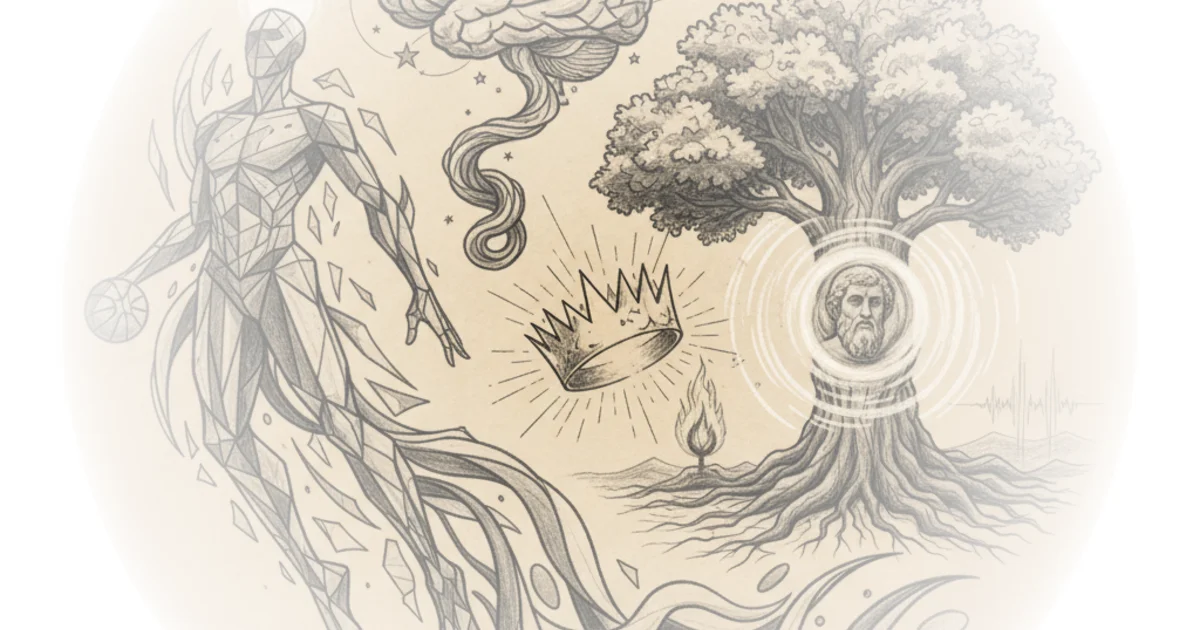
The argument takes a sharp turn when categorizing contemporary figures. The lecture separates those who perform from those who create. Yale University asserts, "performer Ma would argue is like a carpenter carrying out the blueprint of the architect. The architect is the genius not the carpenter." This framing is provocative, placing even revered artists like Yo-Yo Ma and Meryl Streep in the "celebrity" column because they interpret existing works rather than originating new ones. The logic holds that while execution requires immense talent, it lacks the generative spark that defines genius.
The genius is not the performing cellist, Yo-Yo Ma, but Mozart, the guy who wrote the music for Yo-Yo to play.
Critics might argue that this definition is too rigid, dismissing the transformative power of a performer's interpretation or an athlete's physical evolution of a sport. However, the lecture anticipates this by introducing a nuance: athletes can transcend celebrity if they leverage their platform for societal change. Citing Muhammad Ali, the text notes that these individuals used their "excellence and in effect moral Capital earned in their sport... as a platform or Foundation upon which to build or to campaign for something better." This exception saves the argument from being purely elitist, acknowledging that genius can also be a catalyst for social justice.
The Architects of Change
The lecture then pivots to the group Yale University identifies as genuine geniuses: those who have fundamentally shifted the trajectory of human capability. The criteria here are strict and tangible. "If there is no creativity there is no genius," the speaker states, establishing a clear metric for evaluation. This is where the list diverges sharply from popular opinion, including figures like Elon Musk and Bill Gates, whose contributions are framed as structural rather than merely financial.
Yale University highlights the transformative nature of Musk's work, noting that he "started his own space company thereby cutting the cost of putting satellites in orbit in half." Similarly, the lecture reframes Bill Gates not just as a wealthy businessman, but as the architect of the digital age who "has created things the text of the script for our entire course." The inclusion of Dolly Parton is particularly striking, as the lecture argues she is a genius not for her wigs or wealth, but for her ability to "encourage and empower millions of working-class women to have faith in their own powers." This expands the definition of genius to include cultural and psychological impact, not just technological innovation.
The most scientific validation comes from Jennifer Doudna, whose work on CRISPR and mRNA is cited as the direct precursor to the vaccines that saved millions during the pandemic. Yale University writes, "anybody who wins a Nobel Prize is a genius at least in my book." While the Nobel Prize is a committee decision, the lecture uses it to anchor the concept of genius in peer-reviewed, world-altering science. The argument suggests that while celebrity is fleeting, the utility of a genius's creation ensures their immortality.
The face of Genius is not absolute and permanent but changeable, relative to time, place, and culture.
The Verdict of Time
The final section of the lecture addresses the fluidity of these labels. Yale University uses the example of Rudy Valley, a once-famous pop idol who is now forgotten, versus Albert Einstein, whose name endures. The text observes, "nobody writes books about Rudy Valley but they still do and will continue to do so about Albert Einstein." This historical perspective serves as the ultimate test: time is the only true arbiter of genius.
The lecture concludes with a chess analogy, contrasting the world champion Magnus Carlsen with the game's inventor. Carlsen is brilliant, but he is playing a game someone else invented. "He hasn't created any new moves or any new strategies," the speaker notes, reinforcing that mastery is not the same as creation. The distinction is clear: celebrity is about being the best at what exists; genius is about creating what comes next.
Bottom Line
Yale University's argument is a powerful corrective to the modern obsession with fame, successfully reframing genius as a function of creative output rather than public recognition. Its greatest strength lies in the rigorous application of the "creative imperative," which elegantly separates the architect from the carpenter. However, the definition risks being too exclusionary by dismissing the profound cultural impact of master performers, a nuance the lecture touches on but ultimately sidesteps to make its point. Readers should watch for how this definition of genius evolves as artificial intelligence begins to automate creation, challenging the very human agency the lecture celebrates.