This piece cuts through the noise of a single gaffe to reveal a centuries-old weaponization of gender and race. Kahlil Greene does not merely report on a UFC fighter's insult; he traces the lineage of that specific lie back to 1858, arguing that the attack on Michelle Obama is not an anomaly but a recurring mechanism used to strip Black women of their humanity whenever they achieve prominence. For listeners seeking to understand the deeper currents beneath today's headlines, this historical context transforms a momentary spectacle into a study of enduring power dynamics.
The Architecture of Denial
Greene opens by dismantling the idea that the claim made on the White House South Lawn was spontaneous or unique. He writes, "The line was vulgar enough to suit a night critics had already written off as a spectacle, though the lie behind it is nearly two centuries old." This framing is crucial because it forces the reader to look past the immediate shock of the event at the UFC Freedom 250 celebration and examine the historical blueprint being followed. The author notes that Josh Hokit's assertion that "Michelle Obama is a man" was met with a mix of cheers, boos, and stunned silence, while the executive branch offered no condemnation.
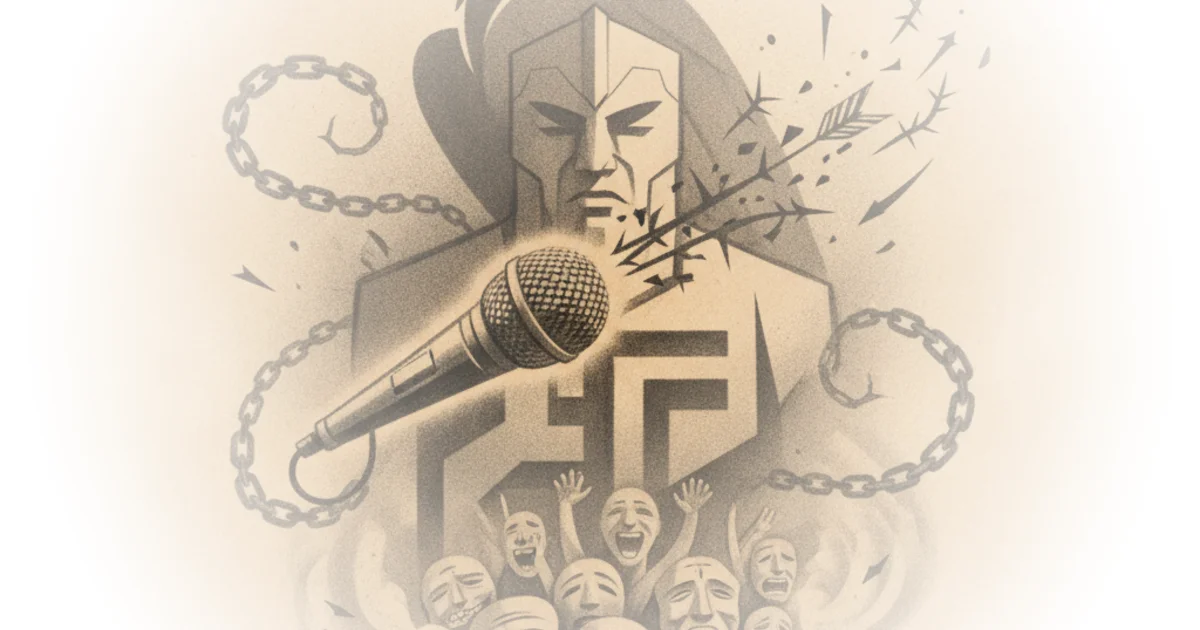
The core of Greene's argument rests on the function of this specific slur: it is not about biology, but about status. He posits, "It has always served the same purpose: to strip Black women of their womanhood whenever they become too prominent to ignore." This observation lands with particular force when contrasted with the administration's reaction to other perceived slights. While communications director Steven Cheung previously demanded a comedian be fired for a joke about the current First Lady, he ignored this direct attack on her predecessor. Greene highlights this double standard by noting that the White House "loudly demanded respect" for one woman while remaining silent over an attack on another.
The lie festered for years in far-right and conspiracy media, amplified by figures like far-right conspiracy theorist Alex Jones, until it was familiar enough that Hokit felt comfortable repeating it in Michelle Obama's former home.
Critics might argue that focusing on historical precedents distracts from the immediate accountability of the current administration. However, Greene effectively counters this by suggesting that the silence itself is a policy choice. He writes, "President Trump—while sitting on federal ground during the nation's 250th-birthday celebration—reacted to the slur with a brief smile and let it stand, showing exactly what this administration deems acceptable behavior." This connects the dots between political signaling and public behavior, suggesting that the absence of condemnation is as loud as an endorsement.
Echoes from Silver Lake
To illustrate the longevity of this tactic, Greene pivots to a harrowing episode involving Sojourner Truth in 1858. He details how a pro-slavery crowd, unsettled by Truth's physical stature and commanding voice, accused her of being a man in disguise. The historical record shows that the crowd voted to force her to expose her breasts to prove her womanhood. Greene describes this moment as "a kind of symbolic rape," noting that such accounts ran in abolitionist presses like William Lloyd Garrison's Liberator.
The author uses this historical anchor to explain the 19th-century "cult of true womanhood," which reserved dignity and protection almost exclusively for white women. He argues that Black women were intentionally excluded from this definition because, as he puts it, "if they were not truly women, then their labor and their suffering required no tenderness or protection." This historical lens makes the modern application of the slur clearer: when a powerful Black woman like Serena Williams is called a man, or when rumors swirl around Olympic swimmer Katie Ledecky due to her muscular build, the underlying logic remains the same. Greene observes, "The underlying idea is that a woman who is simply too good cannot really be a woman."
However, he draws a sharp distinction in how these accusations play out across race. For white athletes like Ledecky, the rumors are usually confined to athletics. For Black women, "these accusations are leveled in any field where they manage to rise to greatness." This nuance is vital; it prevents the issue from being dismissed as general misogyny and identifies it specifically as gendered racism.
The Cost of Complicity
The piece concludes by examining the real-world consequences of allowing such rhetoric to go unchallenged. Greene points to a previous incident where AI-generated footage depicted Barack and Michelle Obama with their faces on dancing apes. He notes that after backlash, the White House deleted the video but refused an apology, claiming ignorance. "Regardless of whether this is true," Greene writes, "his refusal to condemn these racist incidents makes the next incident more likely." This creates a causal link between institutional inaction and the escalation of public hostility.
The author suggests that Michelle Obama's silence on Hokit's remark is not an admission of defeat but a strategic refusal to dignify the attack. Instead, she focused on the unveiling of her official portrait, a move Greene frames as a reclaiming of dignity. He writes, "Michelle Obama has never dignified these attacks with a real response, and she shouldn't have to." Yet, he warns that the attendees who cheered and the officials who smiled are the reason this lie persists.
Calling a Black woman a man has never had anything to do with biology. It is a way of denying her the dignity and basic human consideration that womanhood is supposed to confer.
Bottom Line
Greene's strongest contribution is his ability to map a modern political gaffe onto a two-century-old strategy of dehumanization, proving that what happened at the UFC event was not an isolated incident but part of a continuous historical thread. The argument's greatest vulnerability lies in its reliance on the reader accepting that institutional silence equates to active complicity, a connection that some may argue requires more explicit evidence of intent rather than just reaction. Ultimately, this piece serves as a necessary reminder that the most damaging lies are often the ones we have heard before.