Matthew Yglesias confronts a paradox that haunts modern policy analysis: how do you write about the present when the future is accelerating so fast that today's debates may be obsolete before publication? His most striking claim is that the current frenzy over whether large language models are "useful" or "hype" misses the forest for the trees, because the real story isn't about the tools we have now, but the exponential trajectory of recursive self-improvement that could render all current labor market models irrelevant.
The Illusion of the Present
Yglesias begins by dismantling the comfort of traditional policy forecasting. He notes that his initial idea—arguing that artificial intelligence could reverse the historical drain of talent from teaching by making white-collar work less lucrative—collapses under scrutiny. "Couldn't this same process significantly reduce the value of a traditional education?" he asks, channeling the skepticism of his editors and even the AI models themselves. The core of his argument is that while automation might eventually redirect human capital toward education, the timeline is too uncertain to build a policy column around.
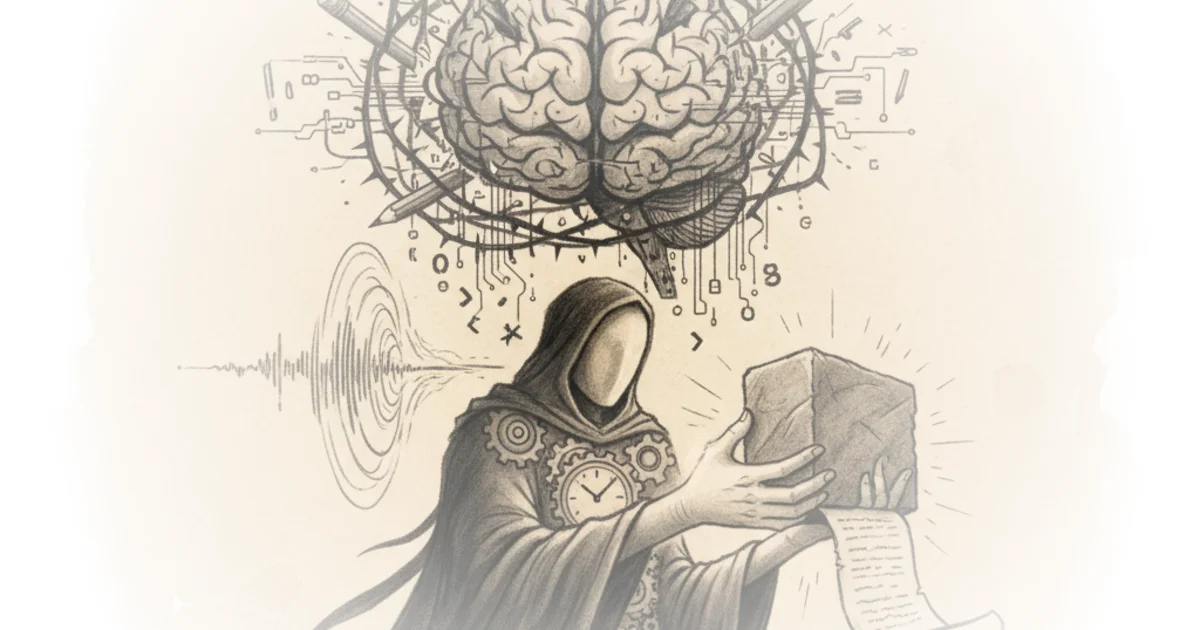
He observes that most public discourse is trapped in a narrow window. "Most A.I. debates are about the present," Yglesias writes, pointing out that arguments between skeptics and enthusiasts are really just disagreements about the current utility of specific models like Claude or ChatGPT. This framing is effective because it exposes a collective blind spot: we are arguing about the specs of a car while the engine is being redesigned to fly. The author suggests that if you believe in the possibility of superintelligence arriving within a decade, "you wouldn't be selling it to China or reassuring people about the enduring value of the human touch."
If you believe God-like superintelligence will arrive in the next decade, you wouldn't be selling it to China or reassuring people about the enduring value of the human touch.
Critics might note that this focus on the "exponential" future risks paralyzing action on immediate, solvable problems. By fixating on the singularity, we might ignore the very real, very present disruptions happening in software development and customer service right now.
The Exponential Trap
The piece shifts to a more technical, yet terrifying, observation about the nature of progress in AI labs. Yglesias highlights that the highest-paid staff at these companies aren't marketing current products; they are using current tools to build the next generation. "If that continues, the gap in capability between GPT-7 in 2031 and GPT-5 today will not be as large as the gap between GPT-5... and GPT-3," he writes. This comparison to the jump from GPT-3 to GPT-5 is chilling because it suggests that the next leap won't just be an improvement; it will be a qualitative transformation.
He draws a parallel to historical shifts in data availability, noting that fears about running out of training data were solved by synthetic data, and efficiency gains like those from DeepSeek didn't reduce demand but increased it. "It just showed us how to use it more efficiently, meaning it started being used more than ever," Yglesias explains. This relentless momentum makes the "dual-track" thinking he proposes necessary but agonizing. One must simultaneously prepare for a world where AI is just another productivity tool and a world where it fundamentally alters the human condition.
The author's willingness to entertain the "intelligence explosion" scenario is rare in mainstream policy writing. He admits that if we are facing a future of "swarms of super-genius A.I.s," then questions about police staffing or school accountability become moot. "Basically everything will be irrelevant if in a few years we have swarms of super-genius A.I.s," he states. This is a bold admission of uncertainty in a field that often pretends to have answers.
The Human Element in a Machine Future
Despite the overwhelming focus on the future, Yglesias returns to the human cost of the transition. He revisits his initial idea about teaching, noting that just as second-wave feminism drew talent away from classrooms, AI could theoretically pull it back. He references the historical context of women like Jeannette Rankin and Elizabeth Blackwell, who broke barriers long before the 1970s, to illustrate that social attitudes, not just policy, drive workforce shifts. "It seems likely to me that as artificial intelligence generates a sharp decline in the demand for major categories of white-collar work... we could see a reversal of that flow," he argues.
However, he also touches on the potential for social instability. "If white-collar work diminishes in its economic rewards and social prestige, that could create explosive politics driven by downwardly mobile office workers even if it's beneficial on net." This is a crucial counterpoint to the techno-optimist narrative. The transition won't just be a smooth reallocation of labor; it could be a source of deep political friction. The author suggests that while AI might help solve police recruiting shortages or improve education through personalized tools, the structural incentives of our institutions may not be ready to adapt.
If white-collar work diminishes in its economic rewards and social prestige, that could create explosive politics driven by downwardly mobile office workers even if it's beneficial on net.
The piece also touches on the political alignment of the executive branch. Yglesias notes that the current administration has aligned itself with AI boosters, favoring the export of chips and the growth of tech companies, yet this stance is ironic given that true believers in superintelligence wouldn't be so focused on current commercial advantages. This observation cuts through the political noise to reveal a deeper disconnect between policy and the technological reality.
Bottom Line
Yglesias's most powerful contribution is his refusal to choose between the "slow invention" and "singularity" narratives, instead forcing the reader to hold both possibilities in mind. The argument's greatest strength is its intellectual honesty about the limits of prediction, but its vulnerability lies in the potential for this uncertainty to become an excuse for inaction on the immediate labor market disruptions. Readers should watch for how policymakers attempt to regulate a technology that may evolve faster than any legislative cycle can manage.