A year into a second term defined by tariff escalation and geopolitical recalibration, one of China's leading scholars has identified something unexpected in Washington's approach to Beijing: not escalation, but restraint. Zichen Wang calls the current state of affairs "fragile stability" — a relationship that has stepped back from the brink without anyone quite knowing whether it will hold.
Wang is a professor at Peking University and a member of the Standing Committee of the Chinese People's Political Consultative Conference. His analysis, first published through Tsinghua University's Global Economic Governance 50 Forum and translated for an English-language audience, arrives at a moment when both capitals are preparing for renewed high-level diplomacy. The timing matters. As Zichen Wang puts it, the two countries have been "repeatedly nearing the brink of confrontation" — and yet they have also held a leaders' summit and agreed to suspend the implementation of proposed high tariffs on each other's goods.
The Tariff Shock and Its Aftermath
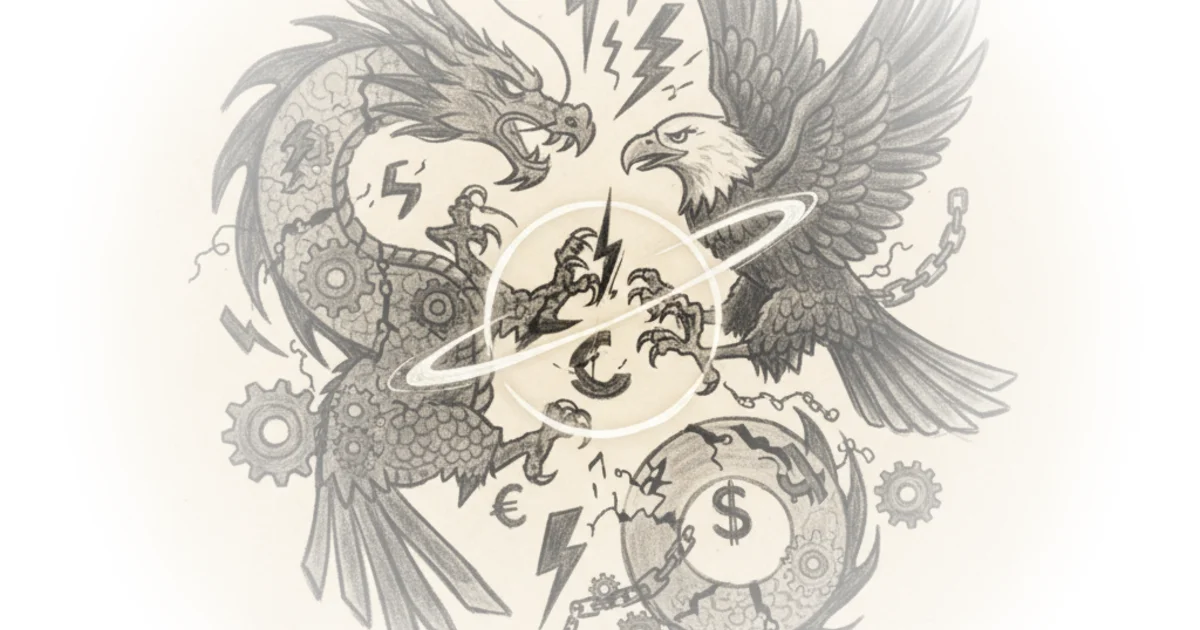
The opening moves of the second term were unmistakable. Within weeks, the Washington administration launched what amounted to a comprehensive tariff offensive. Beijing responded with countermeasures of its own. The two sides traded blows until proposed duties reached staggering levels: 145 percent on the American side, 125 percent on the Chinese. Bilateral economic and trade ties seemed headed for rupture.
But rupture did not come. After the storm, as Wang notes, both sides opened talks and agreed to suspend the implementation of most proposed tariffs. Five rounds of negotiations followed. Each time, the suspensions held. Discussions expanded beyond trade to cover fentanyl control, technology export restrictions, rare earth export controls, and agricultural purchases — reaching intentions to cooperate on some issues, even as no final tariff deal emerged.
"Although no final tariff deal has been reached to date, both sides intend to keep addressing issues through consultation and negotiation."
The economic interdependence that tariff hawks hoped to dismantle proved more resilient than anticipated. China remains the United States' third-largest export destination and third-largest source of imports. The United States remains China's largest goods export destination. In 2025, bilateral trade totaled roughly 4 trillion yuan despite the tariff headwinds. Trade volumes have fallen, but the commercial relationship has not fractured.
Interest Over Ideology
What distinguishes this period from earlier chapters of great-power competition, Wang argues, is a noticeable shift in priorities. The current Washington posture places interests before principles. Ideological framing — the democracy-versus-authoritarianism narrative that colored much of the previous decade — has receded. The administration has deliberately steered clear of some of the most sensitive flashpoints: Taiwan, Xinjiang, Tibet, Hong Kong. When pressed by reporters on how he would respond to conflict in the Taiwan Strait, the president declined to say.
The public messaging has been equally notable. The president has emphasized his personal rapport with Xi Jinping, stating that if China and the United States cooperate, they can solve any problem in the world. He has even floated the idea of a revived "G2" framework — a concept that would have been unthinkable during the height of strategic competition rhetoric.
Critics might note that downplaying ideology does not mean abandoning confrontation — it merely means choosing economic leverage over moral argument. The tariff apparatus, tech export controls, and entity list restrictions all remain active instruments of pressure. The shift is tactical, not philosophical.
A Fragile Architecture
Wang is clear-eyed about the vulnerabilities built into this arrangement. The stability he describes is fragile precisely because it depends on a single individual's preferences rather than institutional consensus.
Four sources of disruption loom large.
First, anti-China forces within the U.S. government continue to push a harder line. In May 2025, the State Department prepared to revoke visas for certain Chinese students studying in critical fields — a move halted only after public intervention from the president himself.
Second, Congress has proven willing to legislate around the executive's preferences. The Taiwan Assurance Implementation Act, promoted by members of both parties, passed both chambers and was sent for presidential signature. It requires the State Department to review engagement guidelines with Taiwan's authorities every five years — effectively institutionalizing a more assertive posture regardless of who occupies the Oval Office.
Third, the bureaucracy moves on its own momentum. The Commerce Department extended entity list restrictions to any firm majority-owned by listed parties. A new service fee was levied on Chinese vessels. Arms sales to Taiwan proceeded on schedule. These measures often reflect departmental priorities rather than direct political instruction, and they accumulate into a pattern of pressure that no single political figure easily reverses.
Fourth, U.S. allies are not aligned with Washington's approach. Most do not endorse the current China policy, viewing it as insufficiently tough. Some may even provoke incidents to draw the United States into their own disputes. Wang points to Canada's warship transit through the Taiwan Strait and Japan's floating of possible intervention on Taiwan — moves that test whether Washington's transactional posture extends to alliance commitments.
"After years of deterioration, China and the United States now lack even a basic level of mutual trust, making it uncertain whether they can cooperate to manage the challenges outlined above."
What Both Sides Should Do
Wang closes with a set of policy recommendations that read as much as a cautionary list as a roadmap. Both countries must recognize that cooperation serves their fundamental interests — the relationship is not zero-sum, and shared concerns outweigh points of conflict. The Taiwan issue demands particularly careful management to avoid military confrontation triggered by miscalculation. Ideological competition should be downplayed. Unofficial, leader-level channels need to complement formal diplomacy. And where interests overlap — promoting ceasefires, overseeing AI security risks, curbing nuclear proliferation, combating transnational crime — successful cooperation could begin to rebuild the trust that years of deterioration have eroded.
Critics might also note that Wang's framework assumes both sides share the same definition of "cooperation." For Washington, cooperation has often meant Beijing accepting American terms. For Beijing, cooperation has meant Washington accepting the legitimacy of China's governance model and territorial claims. These are not easily reconciled positions.
Critics might further observe that the analysis leans heavily on elite diplomatic channels and state-level signals while giving less weight to the forces that could upend the calculus from below: domestic political movements, economic disruptions that radicalize public opinion, or the unpredictable dynamics of alliance politics in the Indo-Pacific.
Bottom Line
The "fragile stability" Zichen Wang describes is real — but it is stability built on personal rapport and tactical pause, not institutional foundation. When a relationship hinges on one leader's willingness to sideline his own party's consensus, it is stable only for as long as that leader remains unconstrained. The window for steady China–U.S. relations in 2026 is genuine. It is also narrow.