Good Times Bad Times makes a startling claim: the death of cartel kingpin El Mencho isn’t Mexico’s inflection point—it’s the state’s sudden willingness to risk bloody confrontation that truly shifts the paradigm. What sets this apart is the razor focus on structural rot over personality-driven narratives, backed by real-time political risk data you won’t find in wire-service reporting. For anyone tracking Latin America’s security crisis, this reframes the entire conversation.
The Myth of the Decapitation Victory
Bad Times immediately dismantles the comforting fiction that killing a cartel boss ends the threat. "Organized crime in Mexico operates by its own twisted logic. It is driven by deep structural forces, not individual events or twists of fate," the author writes—a line that lands like a gut punch to policymakers fixated on body counts. The core argument is devastatingly simple: cartels are corporations with diversified revenue streams, not mobs led by mustachioed villains. When Bad Times details how the Jalisco New Generation Cartel (CJNG) absorbed smaller groups to build a global empire spanning drug trafficking, illegal mining, and cybercrime, it exposes why "cutting the head off" fails. This lands because it mirrors corporate mergers—El Mencho wasn’t a dictator but a CEO overseeing a $23 billion enterprise. Critics might note the author underplays U.S. complicity in fueling demand, yet the evidence of CJNG’s reach—40 countries, armed drones, anti-aircraft guns—is irrefutable.
Cutting the head off a major criminal organization does not mean the Hydra has ceased to exist. Removing a CEO doesn’t destroy the company he run.
Why the State Finally Fought Back
The author’s boldest pivot is framing President Claudia Sheinbaum’s operation as a symbolic rupture with the failed "hugs not bullets" policy of her predecessor. Bad Times writes, "For the Mexican state, though, this operation marks a genuine turning point. After a long stretch of inaction or outright weakness, Mexico demonstrated both the capability and the political will to confront the cartels, even when that confrontation carries real risk and real cost." This isn’t triumphalism—it’s forensic analysis of how cartels interpret state weakness. The 2019 Culiacán crisis, where soldiers released El Chapo’s son amid cartel threats of massacre, proved force works. Bad Times wisely connects this to today’s stakes: with the 2026 World Cup in CJNG’s heartland, asymmetric attacks on Guadalajara could cripple Mexico’s economy. Yet the piece overlooks how military-centric approaches risk repeating past atrocities like the 2014 Tlatlaya massacre, where soldiers killed 22 civilians.
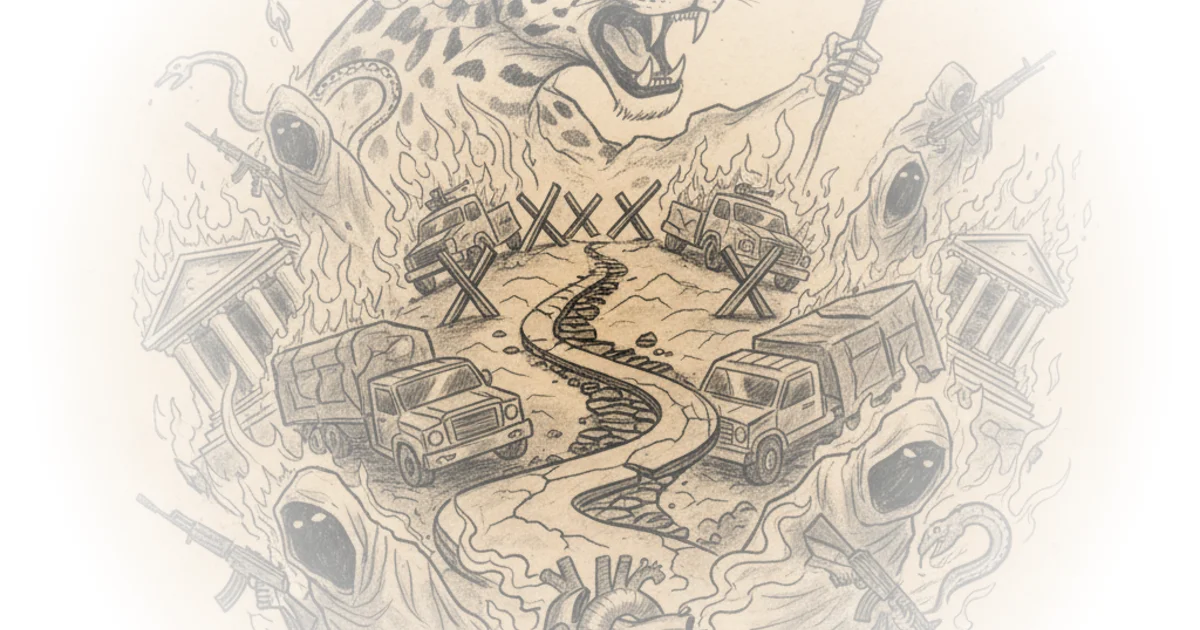
The Unkillable Hydra
Where Bad Times truly shines is diagnosing why cartels regenerate. "Why does this ecosystem keep regenerating? The reasons are structural," the author insists, then delivers a masterclass in systemic analysis: fentanyl profits, ungovernable terrain, and narco culture’s seductive pull on marginalized youth. The observation that "for many young people, a career in CJNG becomes as natural as a Harvard graduate landing a job at Goldman Sachs" cuts deep—especially when detailing TikTok recruitment ads offering $700 monthly for "protection work." This reframing of cartels as aspirational employers, not just criminals, is the piece’s sharpest insight. But it downplays how U.S. gun trafficking arms these groups; 70% of seized cartel weapons trace back to American dealers.
Bottom Line
Bad Times’ structural lens on cartel resilience is revolutionary—and its dismissal of decapitation tactics as mere "tactical victories" is the strongest argument in print today. The biggest vulnerability? Overstating Sheinbaum’s break from past policies without proving systemic justice reforms are underway. Watch whether Mexico targets cartel finances next—or if the World Cup becomes the cartels’ revenge stage.